appnext

Sabtu, 01 Juni 2019

These were the best Android games released in May

A top-down Lovecraftian adventure, a word puzzler, and an amazing audio narrative adventure.
Notable games released in May

  • Tesla vs Lovecraft ($9.99) is a tough-as-nails twin-stick shooter with rogue-like elements.
  • Alt-Frequencies ($4.99) is an audio narrative mystery game that centers around time travel, misinformation, and a government conspiracy.
  • Word Forward ($2.99) offers a new twist for fans of the word puzzle genre.
  • Daggerhood ($2.99) is a fun new platformer that features tight controls and is ideal for fans of speed-running.

Game of the month: Tesla vs Lovecraft

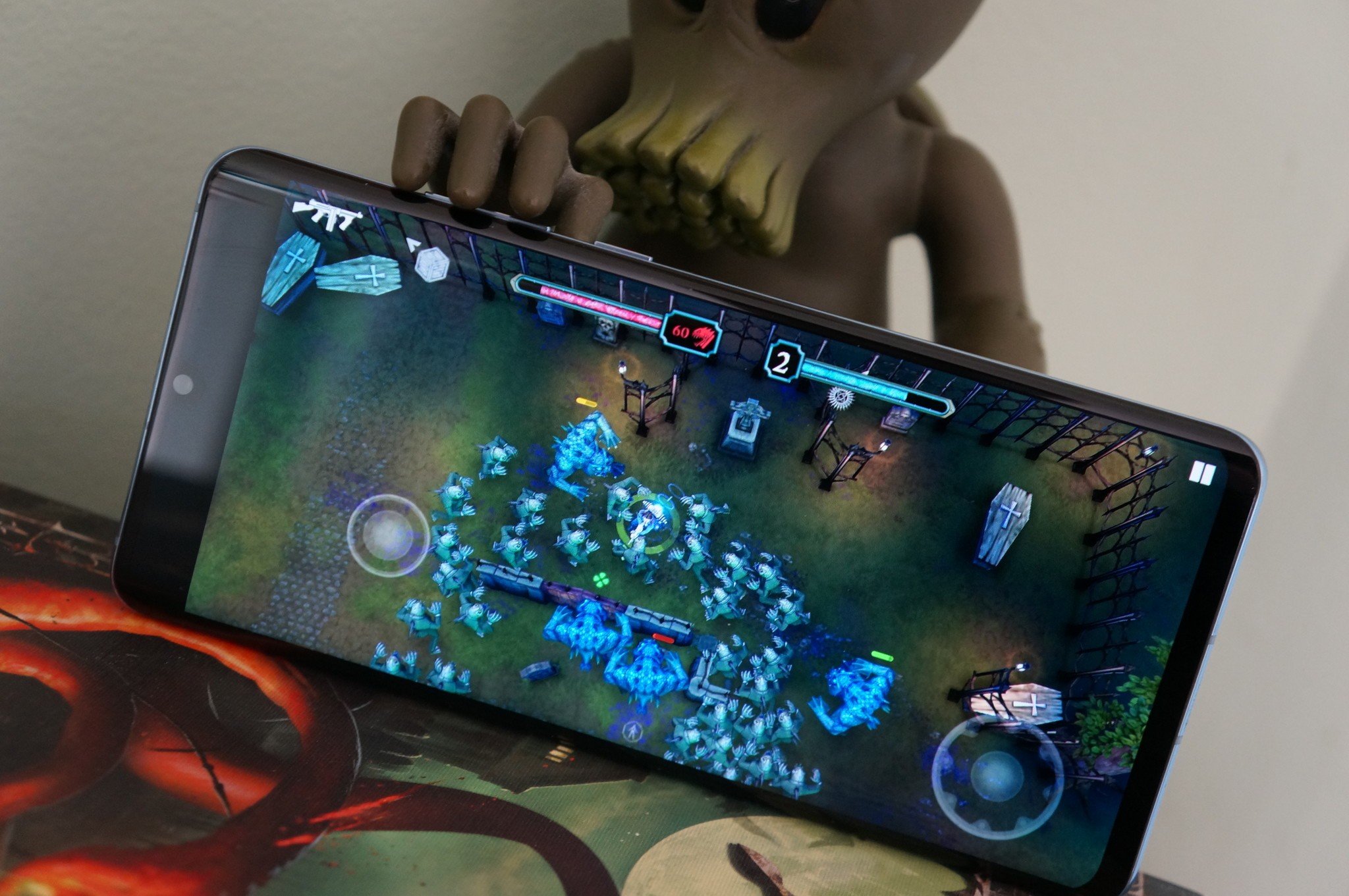
Tesla vs Lovecraft stands above the other games I've looked at this month because it's fun and challenging, offering one of the best twin-stick shooters experiences on Android.

You play as Tesla as he tries to recover his most prized inventions from Lovecraft who has harnessed the powers of the occult to summon endless waves of monsters to stop you. It's a pretty wild concept for a game that ultimately lets you mow down wave after wave of Lovecraftian creatures with upgradeable weapons and occasionally a mech suit that can clear out a horde of enemies real quick. TvL also features rogue-like elements, so as you kill enemies you collect XP which unlocks a new perk every time you level up, but these perks are random and reset if you die or move onto a different level.

Developed by 10tons studio in Finland, this game features you'd come to expect from a premium game are here — quick and responsive gameplay with tight touchscreen controls and support for Bluetooth controllers, a full campaign mode with 35 missions available to play with three levels of difficulty, and an endless survival mode that puts your skills to the test against other players on the global leaderboard.

Download: Tesla vs Lovecraft ($9.99)

Get the most out of your Android gaming experience

SteelSeries Stratus Duo

$60 at Amazon

A great Bluetooth controller for use with Android games that offer gamepad support that also includes a wireless USB dongle for gaming on PCs. Highly recommended!

Ventev Powercell 6010+ Portable USB-C Charger

$37 at Amazon

This battery pack from Ventev is recommended so often because it's so compact and convenient. You get a built-in USB-C cord, built-in AC prong for charging the unit, and 6000mAh battery capacity.

Spigen Style Ring

$13 at Amazon

Of all the phone mounts and kickstands we've tested, the most consistently reliable and sturdy is the original Spigen Style Ring. It also has a minimalist hook mount for your car's dashboard.

androidapkcocom

nice game……:)

androidapkcocom

Amazing app

androidapkcocom

Nice app

The Pixel 3a will make the Pixel 4 a tough sell

Anyone willing to spend money on a flagship phone in 2020 should buy a Galaxy Note.

The Pixel 3a and Pixel 3a XL offer a lot for $400. They perform well enough, they have that incredible camera voodoo the Pixel brand is known for under the hood, and with financing, they cost about as much as 3 fancy coffees from your favorite coffee shop every month. They aren't exactly a rekindling of the Nexus line, but they nail one void its passing left behind: they're good and they're cheap. They will probably also spell trouble for the upcoming Pixel 4 when it comes to sales figures.

A Pixel 3a may not be enough phone for you, but enthusiasts are but a tiny portion of the market.

I can already hear some of you groaning and saying that the $400 Pixel 3a isn't a good enough phone for you. To that, I say it probably is (we're just spoiled) and that's OK because there are plenty of phones that cost more because they offer more when it comes to specs or features. But I'm not talking about us because we're phone nerds. We might not like that a high-end phone costs so much but we'll pay it anyway because smartphones are a necessity, a passion, and a hobby all rolled into one for people like us. I'm talking about the average smartphone buyer, which happens to be the person Google has been trying to woo over with the Pixel line.

Let's speculate what the Pixel 4 XL is going to be for a few minutes. That sounds like fun. It's going to have the Qualcomm Snapdragon 855 without the X50 or X55 5G modem, 4 (maybe 6) GB of RAM, a good Samsung OLED display, wireless charging, and maybe 2 cameras on the back. A look at Android Q — which it will ship with — and I'm also guessing the display will be HDR10+ certified. It will also have a price tag close to $1,000 for the base 64GB of storage model. I'm sure I'm probably wrong a time or two here, but I'm just as sure I won't be too far off the mark in any single category. Google wants the Pixel to be the Android equivalent of the iPhone and it needs to look good, be built well, be simple and "elegant" and not much more. Google can build that phone and has for three years.

More: Android Q features you'll love: Higher-quality audio and video

Now ask yourself one question: would anyone who is not a phone nerd think anything there is worth $600 more than the Pixel 3a XL? Bonus question: if you're a phone nerd, did you think that the Pixel 4a XL might be worth waiting for?

These types of problems are good for us. Decent phones that have a reasonable price are 100% win, and if a Pixel 3a can finish what companies like OnePlus started and drive the price of flagship phones lower by making price reductions and sales happen sooner, everyone wins in the end. But one other thing could happen that isn't the greatest thing in the world for Google's hardware sales numbers and that thing is Samsung.

If you only want fast updates and an unlockable bootloader, the Pixel 3a is there for you at substantial savings. If you want more, just buy a Galaxy Note and have it all.

Samsung already eats Pixel sales for lunch every day and is still hungry afterward. Without doing any math because we don't know exact numbers (I'm guessing 5 million versus 50 million), there are probably close to 100 Galaxy S phones sold for every Pixel sold. Google has been happy with that ratio because it's all Android and it makes money just by Android being there, and Google isn't trying to be a big player when it comes to sales. That's a good thing because of how difficult the company makes buying a Pixel phone for the first month or two after release.

I'm going to guess that about 40% or so of those sales go to phone nerds because of the promise of fast updates for three years or so they can have a phone that's fun and easy to monkey around with.

The Pixel 3a, and presumably a Pixel 4a, will have fast updates for three years and be fun and easy to monkey around with. And it costs $600 less. I know which one I would buy, and a bit of reading across the internet tells me I'm not alone. The Pixel 4 will be a hard sell for a large portion of its existing user base now that a "cheap" option is once again available. And I love it even if Google won't.

The best weather apps for Android! ⛈

In today's world, we've gotten used to seeing the weather change with little notice — and sometime no notice at all. From flash floods and hurricanes to knowing precisely how ungodly hot it is outside, having a trusty weather app on your side can make all the difference. There are plenty of weather apps available from Google Play, but we've got the best of the bunch for you here!

MinuteCast for the win

Accuweather

Staff pick

Many apps and widgets — including most preloaded manufacturer weather widgets — use Accuweather for the same reason you should: it's dependable and damn accurate. MinuteCast is scarily accurate, and it's hard to leave Accuweather for another weather app without it. The app is smartly laid out, comes with a lovely dark theme option, and is worth your trust when bad weather hits.

Free (in-app purchases) at Google Play

Hyperlocal adaptability

Dark Sky

Dark Sky's claim to fame is "hyperlocal" accuracy that can tell you within minutes of when it's actually going to rain. Another standout feature is a global map view that shows you where the rain (and snow) is worldwide at any given time. Dark Sky also features a dedicated do not disturb mode so you can be assured it won't wake you up in the middle of the night, but if you live in a weather-prone area, I highly advise against it.

Free (in-app purchases) at Google Play

Wonderful widgets

1Weather

A beautiful weather app with a bounty of customization options and a dozen weather widgets that can be customized six ways to Sunday, 1Weather has been one of my long-time favorites. There are very few flaws we've found in our extended use of 1Weather, such as the app not always updating immediately when re-opened, but the app performs well and looks good doing it.

Free (in-app purchases) at Google Play

Clean, dark and handsome

Today Weather

This friendly weather app will greet you by your name and then display weather information from one of the user-selectable sources including AccuWeather, Dark Sky, and Yr.no, a Norwegian forecasting service that can produce more accurate forecasts for many parts of the world that aren't America. If you're looking for a weather app that's black as night and will help you see what's coming on a dark and stormy night, Today Weather is for you.

Free at Google Play

Pretty and practical

Yahoo Weather

Combining background images pulled from Flickr for most major cities with forecasts and hyperlocal data from Weather Underground's nationwide network of weather stations, Yahoo holds a place in my heart as the prettiest of the weather apps for Android. The layout for Yahoo Weather is nice for checking multiple locations quickly, as you scroll up and down for the data, then scroll side to side to switch between locations.

Free at Google Play

Professional grade radar

Radarscope

Most weather apps have radar features inside them, but if you need a really good radar app, use what professional meteorologists and storm chasers use: Radarscope. This app has secondary subscriptions within it for the really high-def radar scans and other features, but when they storms are a-blowin', this is the app I've used to watch funnel clouds, tornadoes, and hail cores, even without Pro subscriptions.

$10 at Google Play

Minutecast is addictive

Hyperlocal, hyper-accurate forecasting is something of a misnomer, but it's also something that's invaluable when it works. Accuweather has MinuteCast, which gives you a to-the-minute timeline for the next two hours predicting when rain will start, stop, and how hard it will be. In places where rain can start and stop seemingly at random — like wonderful, thunder-prone Orlando — this kind of feature is ridiculously addictive, and these days before I even start packing my bag to head to the parks, I consult the MinuteCast.

MinuteCast is free on AccuWeather, though Dark Sky has a similar feature if you subscribe to Dark Sky Premium. If your locales are less prone to sudden downpours, you could maybe get by on hourly forecasts, but MinuteCast is a feature I cannot quit.

Notifications matter

When weather is fine notifications from weather apps can be something of a nuisance, but when the weather turns nasty, severe weather alerts are a matter of safety so you need to trust that they'll fire when needed and only when needed. 1Weather allows you to customize your severe notifications meaning that you can get vibrations for watches but sound notifications for warnings — anyone living in Tornado Alley can attest to the usefulness of that distinction — and 1Weather and Accuweather allow you to turn off severe weather notifications for some locations if you keep several locations saved in the app.

Radarscope as a radar-only app does not give push notifications for severe warnings, but does show local and nationwide warnings in the app. Severe weather notifications — and all other notifications — are Premium features in Dark Sky, which is something to be aware of if you intend for the free version of Dark Sky to be your only weather app.

What are the limits of Oculus Quest's playspace?

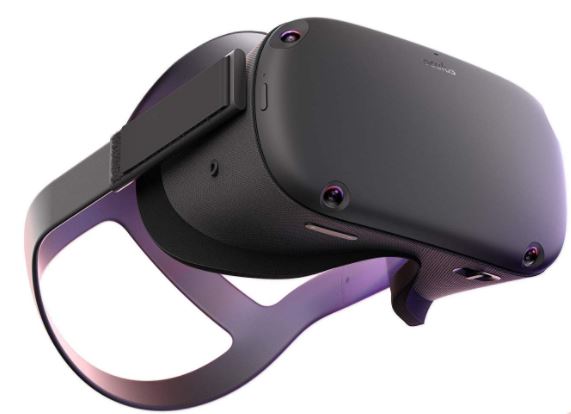
Best answer: It is currently unknown how many rooms can be saved with the Oculus Quest's guardian system, but it appears to be able to easily support dozens of rooms. Since the user has no access to saved rooms, you will have to rely on the Quest to remember for you, and often, you will have to remap the same room again.

  • Untethered VR experience: Oculus Quest (From $399 on Amazon)

What's up with Oculus Quest's guardian system?

The Oculus Quest guardian system uses a unique passthrough system that lets you draw your playspace over your actual surroundings. During a new play session, the Quest is supposed to recognize the room you're in, and load the previous guardian space from that room. Some of this is still in progress, as it often will not recognize your room. This is likely because something has moved in your room that makes the Quest think it's a new space.

I have found it to be somewhat finicky regarding whether or not it pulls up the correct guardian when starting the Quest. I find the best use is, if you have one playspace you use often, and that room stays fairly consistent, it seems to have no problem bringing up the correct guardian.

Attempting to go from room to room with various guardians set up previously did not seem to work effortlessly. Due to the current inconsistency, it is difficult to determine if there is a maximum amount of rooms the Quest can remember.

The future of Oculus guardians and arena scale

Many of the details regarding the guardian system are still unknown. Specifically, what sort of mechanism is used to map and remember rooms. Oculus has big plans for future development for the Quest's tracking, including what they call arena scale. This is a tracking method that will allow a user to map a space of up to 4000 square feet. This will enable the Quest to be used in large-scale events with potentially many participants.

Their test cases involved large playspaces similar to a paintball arena. Time will tell where Oculus will go with this technology. Currently, even without full consistency of remembering rooms and guardians, the process to map your space is probably the least intrusive of all the VR headsets.

Untethered VR

Oculus Quest

$399 on Amazon

The next stage of VR

The Oculus Quest is the newest all-in-one VR device to take your gaming on the go. It requires no PC and no cables, so you are completely untethered! This is the first truly standalone VR gaming experience.