appnext

Sabtu, 29 Februari 2020

How to watch MLS 2020: Live stream every game online from anywhere

Don't miss a single MLS game this season with our guide to watch all the action online

While England's Premier League and Spain's La Liga are more than halfway through their 2019-20 seasons, America and Canada's Major League Soccer (MLS) season is just getting started. The MLS 2020 regular season kicks off on Saturday, February 29th and will run all the way to October when the best teams in the league will compete in the MLS Cup Playoffs to see which two teams will battle it out in this year's MLS Cup.

Keep reading to find out how to watch every single MLS game this season as we'll show you all of the best options for watching the matches on TV or to stream them online.

What is the MLS?

MLS, which stands for Major League Soccer, is the highest level of professional soccer in the United States and Canada. While the league was founded in 1993 as part of the United States' bid to host the 1994 FIFA World Cup, the first season took place several years later in 1996 with just 10 teams.

The league's first championship game known as the MLS Cup was won by D.C. United and in the years since, D.C. United and the Los Angeles Galaxy have won the most league titles with each team winning four championships each. MLS may lack some of the prestige of England's Premier League or Spain's La Liga, it has expanded over the years and there are now 26 teams playing in the league.

The 2020 MLS season will begin on February 29, 2020 and will conclude on October 4, 2020. This season will also mark the first time in which each team does not play every other team at least once.

How to watch MLS from anywhere online

While MLS games are readily available from within the U.S. and Canada, if you're looking to stream the games online from outside either of these countries you'll likely need a VPN (Virtual Private Network) to do so because of geo-blocking. For those unfamiliar, a VPN is a great tool that not only helps secure your internet connection but also allows you to easily appear as though you are in a different location. This can be quite useful when trying to connect to streams that are only available in specific areas, like the MLS ones.

There are lots of different VPNs out there, but we recommend ExpressVPN for a number of reasons. It offers fast connection speeds, a wide variety of server locations, it's very reliable and the customer service is top notch as well. Right now, you can also sign up and get 15 months of service for just $99.95, which is a savings of nearly 50 percent and you also get 3 extra months for free. There are also a bunch of other great options to consider, and some of them are even on sale.

Once you have the VPN installed, you can easily connect to a server in the US or Canada and use one of the streaming options below to tune in and watch the games live online.

ExpressVPN

See latest price at ExpressVPN

No matter where in the world you may be, a VPN is one of the easiest ways to watch all the games this season. Get in on this sweet deal now.

Watch MLS on television in the U.S.

If you live in the US and want to watch MLS on television this season, you have plenty of options to do so as the league's 25th season will see an all-time high 46 network broadcast windows across ABC, Fox, Univision and UniMás. ABC will show 10 games, Fox will show 4 games, Univision will show 14 games and UniMás will show 18 games. Since all of these channels are broadcast for free over-the-air, you won't need a cable subscription to watch the games they show and you can even tune in using an over-the-air antenna.

However, you will need either a cable TV subscription or a subscription to a streaming service to watch the 31 games that will be broadcast on ESPN and the 28 games which will be broadcast on FS1.

How to live stream MLS games online

If you're not interested in signing up for an expensive cable TV subscription just to watch MLS this season, don't worry as there are now a number of streaming services, all at different price points, to help you follow your favorite team all the way to this year's MLS Cup. It's also worth noting that the official MLS YouTube channel will show game highlights for free all season long.

You can live stream MLS online by signing up for fuboTV, Hulu With Live TV, Sling TV, AT&T TV Now, YouTube TV or ESPN+. However, each of these streaming services gives you access to different channels and not all of them will allow you to watch every game this season. To make things easier for you, we've broken down which channels each service offers below.

ESPN+

ESPN+ is just $4.99 per month, making it the cheapest streaming option to watch MLS this season and the service has the exclusive rights to MLS Live which was the league's former subscription service to watch out-of-market games. In addition to being able to watch out-of-market regular season games live, ESPN+ also includes exclusive MLS originals and studio shows such as We Are LAFC and MLS Rewind. You won't be able to watch every MLS game using this service but its extras help make up for this.

ESPN+

See pricing options at ESPN

This is one of the easiest and most affordable ways to watch MLS 2020. You can sign up now with no long-term commitment.

Hulu with Live TV

Hulu With Live TV $54.99 per month and gives you access to 67 channels including Fox in most areas as well as ESPN, ESPN2, FS1 and ABC. You won't be able to watch MLS games on Univision and UniMás but you will be able to watch two streams simultaneously and the service also includes a free 50-hour cloud DVR in case you want to record some games to watch later.

Hulu

$54.99/mo at Hulu

Hulu's Live TV package is a great option for a wide variety of purposes, including streaming the MLS 2020 season.

Fubo TV

FuboTV starts at $54.99 per month and gives you access to Fox in most areas of the U.S. as well as FS1. However, the service does not carry ESPN or ESPN2 so you won't be able to watch the games broadcast on the network. The standard plan will even let you watch Spanish language games on Univision and UniMás. FuboTV also includes a 7-day free trial so you can test out the service for yourself.

Sign up for FuboTV now

Sling TV

SlingTV starting at $20 per month and gives you three packages to choose from and while the service's Sling Orange and Sling Blue plans are cheaper at $20 for the first month and then $30 after, you'll need its Orange & Blue plan which starts at $35 and then increases to $45 per month to get access to all the channels you'll need to watch every MLS game this season. SlingTV also includes 10 hours of Cloud DVR storage for free as well as its own on-demand library.

Sign up for Sling TV now

AT&T TV Now

AT&T TV Now has plans starting at $65 per month and is one of the more expensive streaming services and this is because all of its plans include HBO. With the service's Plus plan, you get access to over 45 channels including Fox, FS1, ESPN, ESPN2, ABC and Univision depending on where you live. AT&T TV Now also allows you to stream on three devices at once and record up to 20 hours of content with its DVR service.

Sign up for AT&T TV Now now

YouTube TV

YouTube TV comes $49.99 per month and gives you access to over 70 channels including ESPN, ESPN2, FS1 and Fox depending on where you live. If you are a Los Angeles FC fan, then the service just might be for you as it gives you exclusive coverage of the team's games. YouTube TV lets you stream on three devices simultaneously and it even includes a 9-month unlimited cloud DVR.

Sign up for YouTube TV now

Live stream MLS in Canada

Canadian MLS fans also have several options to watch this season's games on TV or online.

TSN will show games from all three Canadian teams including every Toronto FC and Vancouver Whitecaps match. While you can watch these games on TV if you're already a cable subscriber, you can also sign up for the network's own streaming service, TSN Direct, for either $19.99 per month or you can buy a Day Pass for $4.99 if there is a particular game you want to watch.

Additionally, TVA Sports will show every Montreal Impact game this season and CTV will broadcast eight MLS games on network television.

How many MLS teams are there?

For the 2020 season, MLS will have a total of 26 teams thanks to the addition of Inter Miami CF and Nashville SC. However, the league will continue to expand to reach 30 teams in the coming years. Austin and Charlotte will both get their own teams in 2021 while St. Louis and Sacramento's teams will join the league in 2022.

The 26 teams currently in the league are grouped into divisions based on their location with 13 teams in the Eastern Conference and 13 teams in the Western Conference.

Eastern Conference

  • Atlanta United FC
  • Chicago Fire FC
  • FC Cincinnati
  • Columbus Crew SC
  • D.C. United
  • Inter Miami CF
  • Montreal Impact
  • New England Revolution
  • New York City FC
  • New York Red Bulls
  • Orlando City SC
  • Philadelphia Union
  • Toronto FC

Western Conference

  • Colorado Rapids
  • FC Dallas
  • Houston Dynamo
  • La Galaxy
  • Los Angeles FC
  • Minnesota United FC
  • Nashville SC
  • Portaland Timbers
  • Real Salt Lake
  • San Jose Earthquakes
  • Seattle Sounders FC
  • Sporting Kansas City
  • Vancouver Whitecaps FC

How many games are in the MLS 2020 season?

In total there will be 884 regular season games in the MLS this year as each of the 26 clubs in the league will play 34 games. Of those 34 games, 17 will be played at home and 17 will be played on the road. Each team will face the other teams in their own conference twice which leaves 10 open dates to play 10 of the 13 teams in the opposite conference. As a result of this, each team will miss out on playing three others in the opposite conference unless they happen to meet in the 2020 MLS Cup.

What is the schedule for the MLS 2020 season?

The MLS regular season will begin on February 29, 2020 and will end on October 4, 2020. The MLS Cup Playoffs will then take place from October to November and the MLS Cup 2020 will be held on November 7.

Full Schedule, by week:

Feb. 29, 2020 (Saturday)

  • D.C. United vs. Colorado Rapids, 1 p.m.
  • Montreal Impact vs. New England Revolution, 3 p.m.
  • San Jose Earthquakes vs. Toronto FC, 5:30 p.m.
  • FC Dallas vs. Philadelphia Union, 6 p.m.
  • Orlando City SC vs. Real Salt Lake, 6 p.m.
  • Vancouver Whitecaps FC vs. Sporting Kansas City, 10:30 p.m.

March 1, 2020 (Sunday)

  • Columbus Crew SC vs. New York City FC, 12:30 p.m.
  • New York Red Bulls vs. FC Cincinnati, 1 p.m.

Saturday, March 7, 2020

  • New England Revolution vs. Chicago Fire, 1:30 p.m.
  • Real Salt Lake vs. New York Red Bulls, 2 p.m.
  • FC Dallas vs. Montreal Impact, 3 p.m.
  • Toronto FC vs. New York City FC, 5 p.m.
  • Atlanta United FC vs. FC Cincinnati, 7 p.m.
  • San Jose Earthquakes vs. Minnesota United FC, 8 p.m.
  • Sporting Kansas City vs. Houston Dynamo, 8:30 p.m.
  • Colorado Rapids vs. Orlando City SC, 9 p.m.
  • Seattle Sounders FC vs. Columbus Crew SC, 10 p.m.
  • LA Galaxy vs. Vancouver Whitecaps FC, 10 p.m.

March 14, 2020 (Saturday)

  • New York City FC vs. FC Dallas, 12:30 p.m.
  • Toronto FC vs. Nashville, 4 p.m.
  • Columbus Crew SC vs. Real Salt Lake, 5 p.m.
  • FC Cincinnati vs. D.C. United, 5:30 p.m.
  • Atlanta United FC vs. Sporting Kansas City, 7 p.m.
  • Vancouver Whitecaps FC vs. Colorado Rapids, 7 p.m.
  • Orlando City SC vs. Chicago Fire, 7:30 p.m.
  • Philadelphia Union vs. San Jose Earthquakes, 7:30 p.m.
  • Houston Dynamo vs. Seattle Sounders FC, 8:30 p.m.

March 15, 2020 (Sunday)

  • New England Revolution vs. Portland Timbers, 1:30 p.m.

March 21, 2020 (Saturday)

  • New York City FC vs. Vancouver Whitecaps FC, 12:30 p.m.
  • Nashville vs. Columbus Crew SC, 2 p.m.
  • Minnesota United FC vs. Montreal Impact, 3 p.m.
  • FC Cincinnati vs. Toronto FC, 3 p.m.
  • Miami vs. New York Red Bulls, 8 p.m.
  • Colorado Rapids vs. Houston Dynamo, 9 p.m.
  • Real Salt Lake vs. New England Revolution, 9 p.m.
  • Seattle Sounders FC vs. FC Dallas, 10 p.m.
  • San Jose Earthquakes vs. Sporting Kansas City, 10 p.m.

March 28, 2020 (Saturday)

  • New York Red Bulls vs. Orlando City SC, 1 p.m.
  • Sporting Kansas City vs. Real Salt Lake, 8:30 p.m.
  • Portland Timbers vs. Philadelphia Union, 10:30 p.m.

April 3, 2020 (Friday)

  • D.C. United vs. New York City FC, 7 p.m.

April 4, 2020 (Saturday)

  • Chicago Fire vs. New York Red Bulls, 2 p.m.
  • Orlando City SC vs. Montreal Impact, 3 p.m.
  • Columbus Crew SC vs. Toronto FC, 4 p.m.
  • Houston Dynamo vs. Portland Timbers, 6 p.m.
  • New England Revolution vs. Colorado Rapids, 7:30 p.m.
  • Minnesota United FC vs. San Jose Earthquakes, 8 p.m.
  • Vancouver Whitecaps FC vs. Real Salt Lake, 10 p.m.
  • LA Galaxy vs. Sporting Kansas City, 10:30 p.m.
  • FC Cincinnati vs. Atlanta United FC, 5 p.m.

April 5, 2020 (Sunday)

  • Philadelphia Union vs. Montreal Impact, 1 p.m.

April 11, 2020 (Saturday)

  • New England Revolution vs. FC Cincinnati, 7:30 p.m.
  • Toronto FC vs. New York Red Bulls, 7:30 p.m.
  • Columbus Crew SC vs. Orlando City SC, 7:30 p.m.
  • TBA vs. Sporting Kansas City, 8 p.m.
  • Minnesota United FC vs. LA Galaxy, 8 p.m.
  • Real Salt Lake vs. Colorado Rapids, 9 p.m.
  • Vancouver Whitecaps FC vs. LAFC, 10 p.m.
  • Portland Timbers vs. FC Dallas, 10:30 p.m.

April 12, 2020 (Sunday)

  • New York City FC vs. Chicago Fire, 12:30 p.m.

April 15, 2020 (Wednesday)

  • D.C. United vs. Toronto FC, 8 p.m.
  • Philadelphia Union vs. LA Galaxy, 8 p.m.
  • Houston Dynamo vs. Minnesota United FC, 8:30 p.m.
  • Colorado Rapids vs. San Jose Earthquakes, 9 p.m.

April 18, 2020 (Saturday)

  • Montreal Impact vs. Houston Dynamo, 1 p.m.
  • New York Red Bulls vs. New England Revolution, 1 p.m.
  • Toronto FC vs. LA Galaxy, 2 p.m.
  • Orlando City SC vs. FC Cincinnati, 7:30 p.m.
  • Nashville vs. D.C. United, 8 p.m.
  • Minnesota United FC vs. FC Dallas, 8 p.m.
  • Sporting Kansas City vs. Colorado Rapids, 8:30 p.m.
  • Seattle Sounders FC vs. Vancouver Whitecaps FC, 10 p.m.
  • LAFC vs. Real Salt Lake, 10:30 p.m.

April 19, 2020 (Sunday)

  • Chicago Fire vs. Columbus Crew SC, 2 p.m.

April 25, 2020 (Saturday)

  • New England Revolution vs. Montreal Impact, 1 p.m.
  • Miami vs. Toronto FC, 3 p.m.
  • Columbus Crew SC vs. Philadelphia Union, 7:30 p.m.
  • Sporting Kansas City vs. Minnesota United FC, 8:30 p.m.
  • Colorado Rapids vs. FC Dallas, 9 p.m.
  • Real Salt Lake vs. Seattle Sounders FC, 9 p.m.
  • Portland Timbers vs. Vancouver Whitecaps FC, 10 p.m.
  • LA Galaxy vs. Houston Dynamo, 10:30 p.m.

April 26, 2020 (Sunday)

  • New York City FC vs. Nashville, 5 p.m.
  • FC Cincinnati vs. San Jose Earthquakes, 5 p.m.

April 29, 2020 (Wednesday)

  • Columbus Crew SC vs. Minnesota United FC, 7 p.m.
  • Toronto FC vs. New England Revolution, 8 p.m.
  • Real Salt Lake vs. Miami, 9:30 p.m.
  • San Jose Earthquakes vs. Vancouver Whitecaps FC, 10:30 p.m.

May 2, 2020 (Saturday)

  • Montreal Impact vs. Orlando City SC, 1 p.m.
  • Toronto FC vs. Vancouver Whitecaps FC, 3 p.m.
  • Seattle Sounders FC vs. D.C. United, 5:30 p.m.
  • New York Red Bulls vs. Columbus Crew SC, 7:30 p.m.
  • New England Revolution vs. New York City FC, 7:30 p.m.
  • Philadelphia Union vs. FC Cincinnati, 8 p.m.
  • Minnesota United FC vs. Colorado Rapids, 8 p.m.
  • FC Dallas vs. Chicago Fire, 8:30 p.m.
  • LAFC vs. Sporting Kansas City, 10:30 p.m.

May 3, 2020 (Sunday)

  • Atlanta United FC vs. Real Salt Lake, 3 p.m.
  • Houston Dynamo vs. San Jose Earthquakes, 4 p.m.

May 6, 2020 (Wednesday)

  • Orlando City SC vs. Houston Dynamo, 7 p.m.
  • FC Cincinnati vs. New York Red Bulls, 7:30 p.m.
  • Colorado Rapids vs. LA Galaxy, 9 p.m.

April 9, 2020 (Saturday)

  • Columbus Crew SC vs. Montreal Impact, 1 p.m.
  • Sporting Kansas City vs. Toronto FC, 4 p.m.
  • D.C. United vs. Houston Dynamo, 7 p.m.
  • Orlando City SC vs. Minnesota United FC, 7:30 p.m.
  • FC Cincinnati vs. New England Revolution, 7:30 p.m.
  • Nashville vs. FC Dallas, 8 p.m.
  • Philadelphia Union vs. Atlanta United FC, 8 p.m.
  • Real Salt Lake vs. Portland Timbers, 9 p.m.
  • Seattle Sounders FC vs. Colorado Rapids, 10 p.m.
  • San Jose Earthquakes vs. LAFC, 10 p.m.
  • New York City FC vs. Toronto FC, 7 p.m.

May 13, 2020 (Wednesday)

  • Nashville vs. Philadelphia Union, 8 p.m.
  • Minnesota United FC vs. Real Salt Lake, 8 p.m.
  • San Jose Earthquakes vs. Seattle Sounders FC, 10:30 p.m.

May 16, 2020 (Saturday)

  • Montreal Impactvs.vs. Chicago Fire, 1 p.m.
  • Toronto FC vs. FC Cincinnati, 5:30 p.m.
  • New York City FC vs. Colorado Rapids, 7 p.m.
  • D.C. United vs. Orlando City SC, 7 p.m.
  • New England Revolution vs. Columbus Crew SC, 7:30 p.m.
  • Vancouver Whitecaps FC vs. Nashville, 7:30 p.m.
  • Philadelphia Union vs. Sporting Kansas City, 8 p.m.
  • Miami vs. Minnesota United FC, 8 p.m.
  • FC Dallas vs. Houston Dynamo, 8:30 p.m.
  • Real Salt Lake vs. San Jose Earthquakes, 9 p.m.

May 23, 2020 (Saturday)

  • Montreal Impact vs. San Jose Earthquakes, 3 p.m.
  • Vancouver Whitecaps FC vs. FC Dallas, 4 p.m.
  • New York Red Bulls vs. D.C. United, 7:30 p.m.
  • New England Revolution vs. Toronto FC, 7:30 p.m.
  • Orlando City SC vs. Columbus Crew SC, 7:30 p.m.
  • Minnesota United FC vs. Portland Timbers, 8 p.m.
  • Chicago Fire vs. FC Cincinnati, 8 p.m.
  • Sporting Kansas City vs. Seattle Sounders FC, 8:30 p.m.
  • Houston Dynamo vs. Nashville, 8:30 p.m.
  • Colorado Rapids vs. Philadelphia Union, 9 p.m.

May 27, 2020 (Wednesday)

  • Atlanta United FC vs. Toronto FC, 7:30 p.m.
  • Columbus Crew SC vs. Vancouver Whitecaps FC, 7:30 p.m.
  • Miami vs. FC Cincinnati, 8 p.m.
  • Chicago Fire vs. Portland Timbers, 8 p.m.
  • Seattle Sounders FC vs. Montreal Impact, 10:30 p.m.
  • LA Galaxy vs. D.C. United, 10:30 p.m.

May 30, 2020 (Saturday)

  • Toronto FC vs. Miami, 6 p.m.
  • Orlando City SC vs. Portland Timbers, 7:30 p.m.
  • FC Cincinnati vs. Nashville, 7:30 p.m.
  • Philadelphia Union vs. Columbus Crew SC, 8 p.m.
  • Chicago Fire vs. New England Revolution, 8 p.m.
  • D.C. United vs. Vancouver Whitecaps FC, 8 p.m.
  • FC Dallas vs. Sporting Kansas City, 8:30 p.m.

May 31, 2020 (Sunday)

  • Montreal Impact vs. Colorado Rapids, 1 p.m.
  • Seattle Sounders FC vs. Real Salt Lake, 6 p.m.

June 6, 2020 (Saturday)

  • New England Revolution vs. D.C. United, 7:30 p.m.
  • Sporting Kansas City vs. Orlando City SC, 8:30 p.m.
  • Vancouver Whitecaps FC vs. Montreal Impact, 10 p.m.

June 13, 2020 (Saturday)

  • Toronto FC vs. Montreal Impact, 7:30 p.m.
  • Orlando City SC vs. New York Red Bulls, 7:30 p.m.
  • Columbus Crew SC vs. Chicago Fire, 7:30 p.m.
  • Minnesota United FC vs. Nashville, 8 p.m.
  • Philadelphia Union vs. Real Salt Lake, 8 p.m.
  • D.C. United vs. FC Cincinnati, 8 p.m.
  • Houston Dynamo vs. Atlanta United FC, 8:30 p.m.
  • Colorado Rapids vs. LAFC, 9 p.m.
  • Vancouver Whitecaps FC vs. Seattle Sounders FC, 10 p.m.

June 14, 2020 (Sunday)

  • New York City FC vs. New England Revolution, 5 p.m.

June 17, 2020 (Wednesday)

  • Montreal Impact vs. Miami, 7 p.m.
  • New York City FC vs. Atlanta United FC, 7 p.m.
  • New England Revolution vs. Seattle Sounders FC, 7:30 p.m.
  • Toronto FC vs. Chicago Fire, 8 p.m.
  • Sporting Kansas City vs. LA Galaxy, 8:30 p.m.
  • FC Dallas vs. Columbus Crew SC, 8:30 p.m.
  • Vancouver Whitecaps FC vs. New York Red Bulls, 10 p.m.
  • Portland Timbers vs. Colorado Rapids, 10:30 p.m.
  • LAFC vs. Minnesota United FC, 10:30 p.m.

June 20, 2020 (Saturday)

  • Montreal Impact vs. LAFC, 7 p.m.
  • Columbus Crew SC vs. D.C. United, 7:30 p.m.
  • New England Revolution vs. Orlando City SC, 7:30 p.m.
  • FC Cincinnati vs. New York City FC, 7:30 p.m.
  • FC Dallas vs. Minnesota United FC, 8:30 p.m.
  • Sporting Kansas City vs. Vancouver Whitecaps FC, 9 p.m.
  • Colorado Rapids vs. Toronto FC, 9 p.m.
  • San Jose Earthquakes vs. Nashville, 10 p.m.

June 27, 2020 (Saturday)

  • Philadelphia Union vs. Vancouver Whitecaps FC, 6 p.m.
  • New York Red Bulls vs. Montreal Impact, 7:30 p.m.
  • Columbus Crew SC vs. Atlanta United FC, 7:30 p.m.
  • FC Cincinnati vs. FC Dallas, 7:30 p.m.
  • D.C. United vs. Minnesota United FC, 8 p.m.
  • Toronto FC vs. Real Salt Lake, 8 p.m.
  • Miami vs. New England Revolution, 8 p.m.
  • Houston Dynamo vs. Colorado Rapids, 8:30 p.m.
  • LAFC vs. Nasville 11:55 PM
  • Atlanta United FC vs. Montreal Impact, 7 p.m.

July 1, 2020 (Wednesday)

  • New York City FC vs. Orlando City SC, 7 p.m.
  • FC Cincinnati vs. Miami, 7:30 p.m.
  • D.C. United vs. FC Dallas, 8 p.m.
  • Minnesota United FC vs. Vancouver Whitecaps FC, 9 p.m.
  • Real Salt Lake vs. Sporting Kansas City, 10 p.m.
  • LA Galaxy vs. Nasville, 10:30 p.m.
  • Portland Timbers vs. Columbus Crew SC, 10:30 p.m.

July 3, 2020 (Friday)

  • Houston Dynamo vs. New England Revolution, 8:30 p.m.

July 4, 2020 (Saturday)

  • Montreal Impact vs. Philadelphia Union, 7 p.m.
  • Orlando City SC vs. Toronto FC, 7:30 p.m.
  • Vancouver Whitecaps FC vs. FC Cincinnati, 10 p.m.
  • LA Galaxy vs. Real Salt Lake, 10:30 p.m.

July 5, 2020 (Sunday)

  • Columbus Crew SC vs. Miami, 6 p.m.
  • Sporting Kansas City vs. LAFC, 6:30 p.m.
  • Nashville vs. Portland Timbers, 7 p.m.
  • Chicago Fire vs. New York City FC, 7 p.m.

July 8, 2020 (Wednesday)

  • New England Revolution vs. Atlanta United FC, 7:30 p.m.
  • New York Red Bulls vs. Seattle Sounders FC, 8 p.m.
  • Chicago Fire vs. Philadelphia Union, 8 p.m.
  • LAFC vs. Colorado Rapids, 10:30 p.m.

July 11, 2020 (Saturday)

  • Montreal Impact vs. Columbus Crew SC, 7 p.m.
  • New England Revolution vs. Nashville, 7:30 p.m.
  • Philadelphia Union vs. Toronto FC, 7:30 p.m.
  • Chicago Fire vs. D.C. United, 8 p.m.
  • Sporting Kansas City vs. FC Cincinnati, 8:30 p.m.
  • FC Dallas vs. LA Galaxy, 8:30 p.m.
  • Colorado Rapids vs. Portland Timbers, 9 p.m.
  • Real Salt Lake vs. Vancouver Whitecaps FC, 10 p.m.

July 15, 2020 (Wednesday)

  • New York City FC vs. FC Cincinnati, 7 p.m.

July 18, 2020 (Saturday)

  • Toronto FC vs. Seattle Sounders FC, 7 p.m.
  • Nashville vs. Real Salt Lake, 8 p.m.
  • D.C. United vs. Montreal Impact, 8 p.m.
  • Philadelphia Union vs. New England Revolution, 8 p.m.
  • Miami vs. New York City FC, 8 p.m.
  • Minnesota United FC vs. Sporting Kansas City, 8 p.m.
  • FC Dallas vs. Orlando City SC, 8:30 p.m.
  • Colorado Rapids vs. Chicago Fire, 9 p.m.
  • Houston Dynamo vs. Vancouver Whitecaps FC, 9 p.m.
  • Portland Timbers vs. San Jose Earthquakes, 10:30 p.m.

July 22, 2020 (Wednesday)

  • Nashville vs. LAFC, 8 p.m.
  • Seattle Sounders FC vs. Houston Dynamo, 10:30 p.m.

July 25, 2020 (Saturday)

  • New York City FC vs. Montreal Impact, 5 p.m.
  • Columbus Crew SC vs. Colorado Rapids, 7:30 p.m.
  • FC Cincinnati vs. Chicago Fire, 7:30 p.m.
  • Toronto FC vs. D.C. United, 7:30 p.m.
  • New England Revolution vs. New York Red Bulls, 7:30 p.m.
  • Orlando City SC vs. Philadelphia Union, 7:30 p.m.
  • Nashville vs. San Jose Earthquakes, 8 p.m.
  • Sporting Kansas City vs. FC Dallas, 8:30 p.m.
  • Vancouver Whitecaps FC vs. LA Galaxy, 10 p.m.
  • Real Salt Lake vs. Minnesota United FC, 10 p.m.
  • Portland Timbers vs. Houston Dynamo, 10:30 p.m.

Aug. 1, 2020 (Saturday)

  • Montreal Impact vs. Sporting Kansas City, 7 p.m.
  • FC Cincinnati vs. Orlando City SC, 7:30 p.m.
  • New York Red Bulls vs. FC Dallas, 7:30 p.m.
  • D.C. United vs. Columbus Crew SC, 8 p.m.
  • Philadelphia Union vs. Miami, 8 p.m.
  • Chicago Fire vs. Toronto FC, 8 p.m.
  • Nashville vs. Minnesota United FC, 8 p.m.
  • Houston Dynamo vs. Real Salt Lake, 8:30 p.m.
  • San Jose Earthquakes vs. New England Revolution, 10 p.m.
  • Colorado Rapids vs. Vancouver Whitecaps FC, 10 p.m.

Aug. 5, 2020

  • Nashville vs. Houston Dynamo, 8 p.m.
  • Chicago Fire vs. San Jose Earthquakes, 8 p.m.

Aug. 7, 2020 (Friday)

  • LAFC vs. New England Revolution, 10:30 p.m.

Aug. 8, 2020 (Saturday)

  • Montreal Impact vs. New York Red Bulls, 7 p.m.
  • New York City FC vs. Philadelphia Union, 7 p.m.
  • Toronto FC vs. Columbus Crew SC, 7:30 p.m.
  • Miami vs. D.C. United, 8 p.m.
  • FC Dallas vs. Real Salt Lake, 8:30 p.m.
  • Vancouver Whitecaps FC vs. Orlando City SC, 10 p.m.
  • Portland Timbers vs. FC Cincinnati, 10:30 p.m.

Aug. 9, 2020 (Sunday)

  • San Jose Earthquakes vs. Houston Dynamo, 9 p.m.
  • Colorado Rapids vs. Nashville, 9 p.m.

Aug. 12, 2020 (Wednesday)

  • New York City FC vs. Columbus Crew SC, 7 p.m.
  • FC Cincinnati vs. LAFC, 7:30 p.m.
  • Atlanta United FC vs. New England Revolution, 7:30 p.m.

Aug. 15, 2020 (Saturday)

  • Toronto FC vs. Philadelphia Union, 6 p.m.
  • New York Red Bulls vs. Chicago Fire, 7:30 p.m.
  • Columbus Crew SC vs. New England Revolution, 7:30 p.m.
  • Orlando City SC vs. D.C. United, 7:30 p.m.
  • vs. Vancouver Whitecaps FC, 8 p.m.
  • Houston Dynamo vs. New York City FC, 8:30 p.m.
  • FC Dallas vs. Colorado Rapids, 8:30 p.m.
  • Sporting Kansas City vs. San Jose Earthquakes, 8:30 p.m.
  • Real Salt Lake vs. Montreal Impact, 10 p.m.
  • LA Galaxy vs. FC Cincinnati, 10:30 p.m.

Aug. 22, 2020 (Saturday)

  • New England Revolution vs. Sporting Kansas City, 7:30 p.m.
  • Columbus Crew SC vs. FC Cincinnati, 7:30 p.m.
  • D.C. United vs. Philadelphia Union, 8 p.m.
  • Minnesota United FC vs. Chicago Fire, 8 p.m.
  • Montreal Impact vs. Toronto FC, 8 p.m.
  • Colorado Rapids vs. Real Salt Lake, 9 p.m.
  • Vancouver Whitecaps FC vs. San Jose Earthquakes, 10 p.m.

Aug. 23, 2020 (Sunday)

  • FC Dallas vs. Nashville, 8:30 p.m.

Aug. 26, 2020 (Wednesday)

  • Montreal Impact vs. Atlanta United FC, 7 p.m.
  • LAFC vs. Vancouver Whitecaps FC, 10:30 p.m.

Aug. 29, 2020 (Saturday)

  • FC Cincinnati vs. Montreal Impact, 7:30 p.m.
  • D.C. United vs. New England Revolution, 8 p.m.
  • Philadelphia Union vs. Orlando City SC, 8 p.m.
  • Sporting Kansas City vs. Columbus Crew SC, 8:30 p.m.
  • Colorado Rapids vs. Minnesota United FC, 9 p.m.
  • Houston Dynamo vs. Toronto FC, 9 p.m.
  • Real Salt Lake vs. Nashville, 9:30 p.m.
  • San Jose Earthquakes vs. FC Dallas, 10 p.m.
  • Vancouver Whitecaps FC vs. Chicago Fire, 10 p.m.

Sept. 4, 2020 (Friday)

  • Montreal Impact vs. D.C. United, 7 p.m.

Sept. 5, 2020 (Saturday)

  • FC Dallas vs. Portland Timbers, 8:30 p.m.

Sept. 11, 2020 (Friday)

  • Montreal Impact vs. New York City FC, 7 p.m.
  • LAFC vs. FC Dallas, 10:30 p.m.

Sept. 12, 2020 (Saturday)

  • Toronto FC vs. Atlanta United FC, 7:30 p.m.
  • Columbus Crew SC vs. Houston Dynamo, 7:30 p.m.
  • Orlando City SC vs. Nashville, 7:30 p.m.
  • New England Revolution vs. Philadelphia Union, 7:30 p.m.
  • Colorado Rapids vs. Sporting Kansas City, 9 p.m.
  • Real Salt Lake vs. FC Cincinnati, 9 p.m.
  • San Jose Earthquakes vs. Portland Timbers, 10 p.m.

Sept. 13, 2020 (Sunday)

  • Vancouver Whitecaps FC vs. Minnesota United FC, 9 p.m.

Sept. 16, 2020 (Wednesday)

  • New York City FC vs. Miami, 7 p.m.
  • Nashville vs. Colorado Rapids, 8 p.m.
  • Houston Dynamo vs. LAFC, 8:30 p.m.
  • Seattle Sounders FC vs. San Jose Earthquakes, 10:30 p.m.

Sept. 19, 2020 (Saturday)

  • Vancouver Whitecaps FC vs. Houston Dynamo, 7 p.m.
  • Columbus Crew SC vs. New York Red Bulls, 7:30 p.m.
  • Orlando City SC vs. New York City FC, 7:30 p.m.
  • FC Cincinnati vs. Philadelphia Union, 7:30 p.m.
  • Miami vs. Montreal Impact, 8 p.m.
  • Minnesota United FC vs. New England Revolution, 8 p.m.
  • Sporting Kansas City vs. Nashville, 8:30 p.m.
  • Portland Timbers vs. Toronto FC, 9 p.m.
  • San Jose Earthquakes vs. Real Salt Lake, 10 p.m.
  • LA Galaxy vs. Colorado Rapids, 10:30 p.m.

Sept. 20, 2020 (Sunday)

  • FC Dallas vs. Seattle Sounders FC, 5 p.m.

Sept. 26, 2020 (Saturday)

  • Atlanta United FC vs. Columbus Crew SC, 6 p.m.
  • New York City FC vs. D.C. United, 7 p.m.
  • Toronto FC vs. Orlando City SC, 7 p.m.
  • FC Cincinnati vs. Minnesota United FC, 7:30 p.m.
  • New England Revolution vs. Miami, 7:30 p.m.
  • Nashville vs. LA Galaxy, 8 p.m.
  • Chicago Fire vs. Montreal Impact, 8 p.m.
  • FC Dallas vs. Vancouver Whitecaps FC, 9 p.m.
  • Colorado Rapids vs. Seattle Sounders FC, 9 p.m.
  • Portland Timbers vs. Real Salt Lake, 10:30 p.m.

Sept. 27, 2020 (Sunday)

  • Houston Dynamo vs. Sporting Kansas City, 7 p.m.

Oct. 4, 2020 (Sunday)

  • Sporting Kansas City vs. New York City FC, 4:30 p.m.
  • New York Red Bulls vs. Toronto FC, 4:30 p.m.
  • San Jose Earthquakes vs. Colorado Rapids, 4:30 p.m.
  • Real Salt Lake vs. LAFC, 4:30 p.m.
  • Miami avs.t Columbus Crew SC, 4:30 p.m.
  • LA Galaxy vs. FC Dallas, 4:30 p.m.
  • D.C. United vs. Atlanta United FC, 4:30 p.m.
  • Philadelphia Union vs. Chicago Fire, 4:30 p.m.
  • Vancouver Whitecaps FC vs. Portland Timbers, 4:30 p.m.
  • Montreal Impact avs.t FC Cincinnati, 4:30 p.m.
  • Minnesota United FC vs. Houston Dynamo, 4:30 p.m.
  • Seattle Sounders FC vs. Nashville, 4:30 p.m.
  • Orlando City SC vs. New England Revolution, 4:30 p.m.

How to watch Real Madrid vs. Barcelona live stream online

Watch La Liga big guns do battle in crucial clash that could be pivotal in the title race.

La Liga is on a knife edge with just two points separating both these two teams. The timing therefore couldn't be better for this latest installment of EL Classico. Don't miss a kick by following or Barcelona vs Real Madrid live stream guide below.

With Real currently sitting in second and having suffered a 2-1 midweek loss at home to Man City in the Champions League, there's added intrigue as to how Zinedine Zidane's side respond to that damaging defeat.

Barcelona head coach Quique Setien is just two months into his new job and will be desperate to endear himself to the Nou Camp faithful by claiming victory in his first Clasico.

The Blaugrana certainly seem to have improved since the 61-year-old took charge, and look to be reverting back to their familiar style of playing the ball out from defence.

The away side are however experiencing something of a defensive crisis with first pick full-backs Jordi Alba are Sergi Roberto both injured, while Gerard Pique also looks unlikely to be available.

The question is, can Real take advantage of their great rivals apparent vulnerability. Los Blancos have struggled at times to hit the target this season,having failed to score on no less than eight occasions in La Liga during this campaign.

Which team will move a step closer to winning La Liga? Read on for full details on how to get a live stream of Real Madrid vs Barcelona no matter where you are in the world with our guide below.

Real Madrid vs. Barcelona: Where and when?

El Clasico takes place at the Estadio Santiago Bernabéu in Madrid on Sunday with kick-off at 9 p.m. CET local time.

That makes it an 8 p.m. GMT start in the UK and a 3 p.m. Eastern, 12 p.m. Pacific kick-off in the U.S. For those tuning in from Australia, it's a 7 a.m. AEDT start on Monday morning for those Down Under.


Watch Real Madrid vs. Barcelona online from outside your country

We have details of all the U.S., UK, Australian and Canadian broadcasters of El Clasico further down in this guide. If you're intent on watching Real Madrid vs Barcelona, but find yourself away from home then you'll run into problems when trying to stream your domestic coverage online from abroad as it's likely to be geo-blocked.

That's where a VPN (Virtual Private Network) can be a lifesaver. They allow you to virtually change the ISP of your laptop, tablet or mobile to one that's back in your home country, letting you watch as if you were back there.

VPN's are incredibly easy to use and have the added benefit of giving you a further layer of security when surfing the web. There are lots of options, and we recommend ExpressVPN as our #1 pick due to its speed, security and ease of use. It can be used on a vast array of operating systems and devices (e.g. iOS, Android, Smart TVs, Fire TV Stick, Roku, games consoles, etc). Sign up for ExpressVPN now now and enjoy a 49% discount and 3 months FREE with an annual subscription. Or give it a try with its 30-day money back guarantee. Looking for other options? Here are some alternatives that are on sale right now.

ExpressVPN

See latest price at: ExpressVPN

No matter where in the world you may be, a VPN is one of the easiest ways to watch Real Madrid vs Barcelona. Get in on this deal now!

How to watch Real Madrid vs. Barcelona online in the US exclusively on BeIN Sports

Pay TV sports service BeIN Sport has exclusive live broadcast rights to La Liga in the U.S., including El Clasico. Subscribers also get access to watching matches via the BeIN Sports Connect streaming app.

BeIN Sport can be accessed via most cable providers, as well as TV streaming services such as as FuboTV and Sling. They also carry free trials, so it's worth checking out if you're of cord cutting persuasion.

Try out FuboTV

Stream the games

Fubo TV

Get a 7-day free trial

Use the trial.

Fubo TV is an excellent option for any sports-lover, and it's one of the only ways to stream the occasional game or event in 4K resolution.

Sling the goals to your TV

Watch the scores

SlingTV

See pricing at Sling

Catch the match.

Sling is still one of the least expensive ways to get the most channels. There are a few different plan options, so be sure to check them all out now.

How to stream Real Madrid vs. Barcelona live in the UK

You'll need to be a Premier Sports customers to watch all the action from the Bernabéu on Sunday in the UK.

The subscription service is available to Sky TV customers from just £5.99 a month for its dedicated LaLiga TV channel. Coverage is fairly no-frills and will get straight to the action at 8 p.m. GMT.

There's also the option of going for the network's full-fat serving that will get you LaLiga TV plus Premier Sports 1 and Premier Sports 2 for just £9.99 on both Sky and Virgin Media, giving you access to the network's Premier Player streaming app as well as live coverage of Serie A and the Dutch Eredivisie. If it's just streaming access you want, then go for the standalone Premier Player package that includes everything for online viewing for £9.99 a month.

Live stream Real Madrid vs. Barcelona live in Australia

If you're planning on watching El Clasico Down Under, then you'll need to be a beIN Sports subscriber as the network holds exclusive live broadcast rights to the tournament for Australia.

You'll need to be ready to tune in at 7 a.m. AEDT on Monday morning to watch the action from Madrid.

Live stream El Clasico live in Canada

As with their North American neighbours, BeIN Sports is the place to head for Spanish soccer fans in Canada, with the BeIN Sports Connect app on mobile the way to go for streaming the match on the go.

If you're not keen on subscribing to BeIN then you also have the option of going with FuboTV who are the exclusive over-the-top provider carrying the streaming service's La Liga soccer coverage.

GOAAAALLLL

Fubo TV

Get a 7-day free trial

Watch the action.

FuboTV offers the access you need to watch the big match up but also gives you lots of other content as well. Don't miss any of the action by signing up for a trial now.

How to use Wireless PowerShare on the Galaxy S20

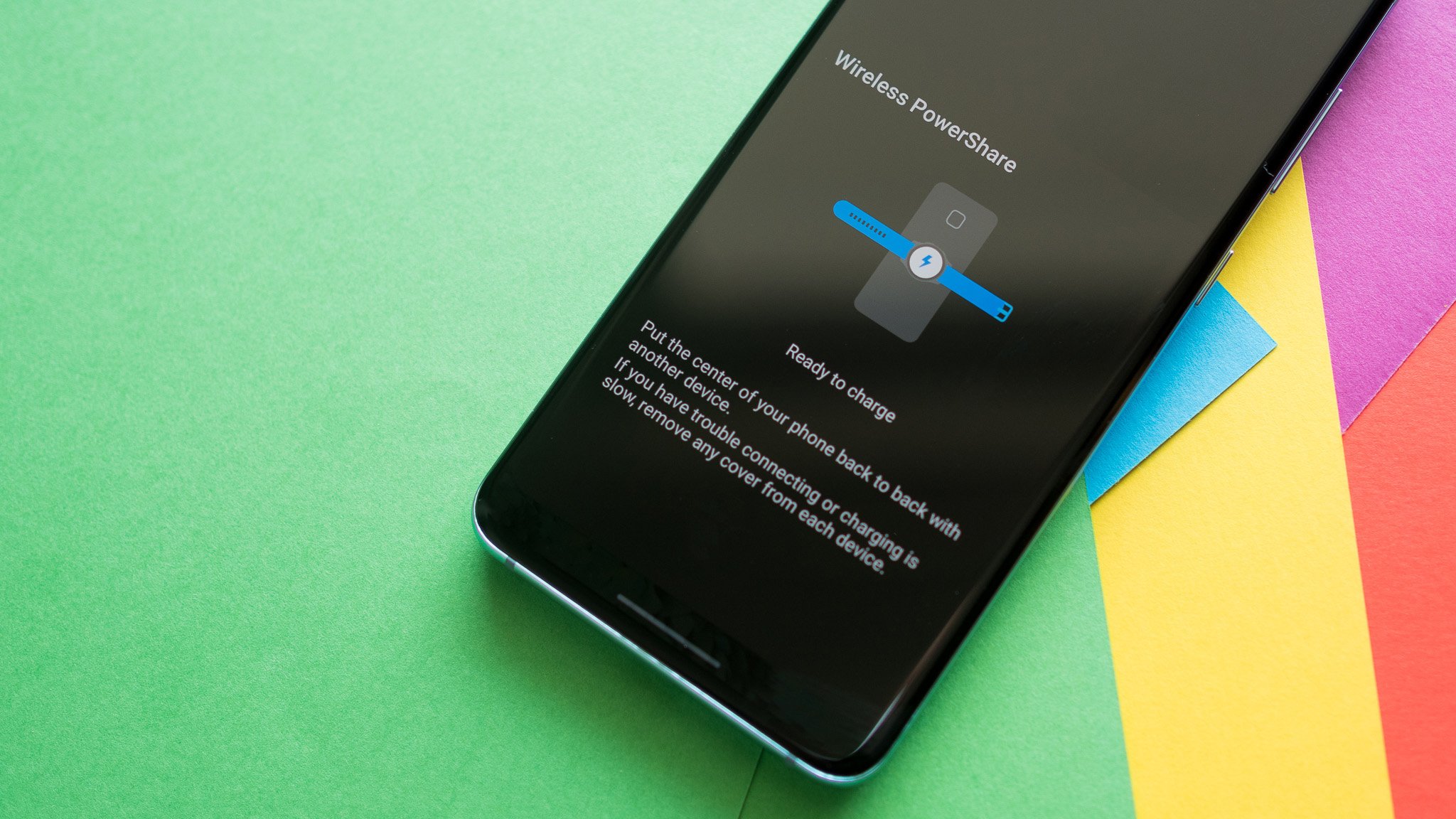
Wireless PowerShare is a pretty nifty feature that lets the Galaxy S20 charge other devices wirelessly. While you can technically charge other phones, the feature is designed to be used with Galaxy Buds and the Galaxy Watch Active 2. Here's what you need to know about the feature, and how to get started.

Products used in this guide

How to use Wireless PowerShare to wirelessly charge devices with the Galaxy S20

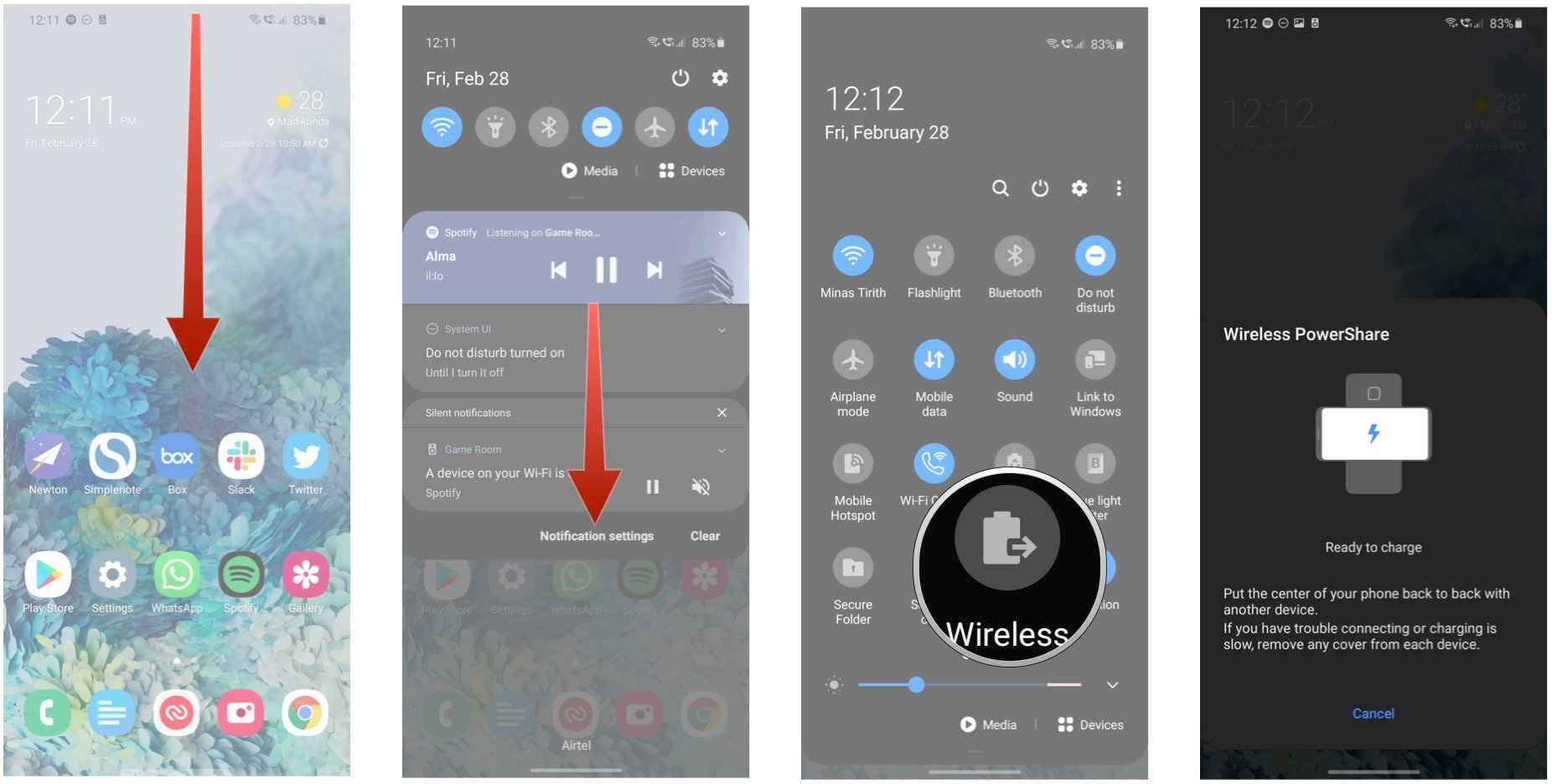
  1. Pull down the notification panel by swiping down from the top of the screen.
  2. Swipe down once more to reveal all the quick toggles.
  3. Select Wireless PowerShare.
  4. Put another device on the back of your S20 to charge it wirelessly with Wireless PowerShare.

Ideally, you'll need to put the device you want to charge at the center of the back of the Galaxy S20 because this is where the wireless charging coil is located. For accessories like the Galaxy Buds+, all you need to do is leave the case on the back of the phone, and it will start charging. You will see a charging indicator on the case, and the S20 also emits a notification tone to indicate that it is charging another device wirelessly.

There's only one point to consider when using Wireless PowerShare: Make sure that your S20 is adequately charged before using the feature. If your phone's battery goes below 30%, you won't be able to charge other devices wirelessly.

Samsung Galaxy S20

$1,000 at Samsung

All the power you need

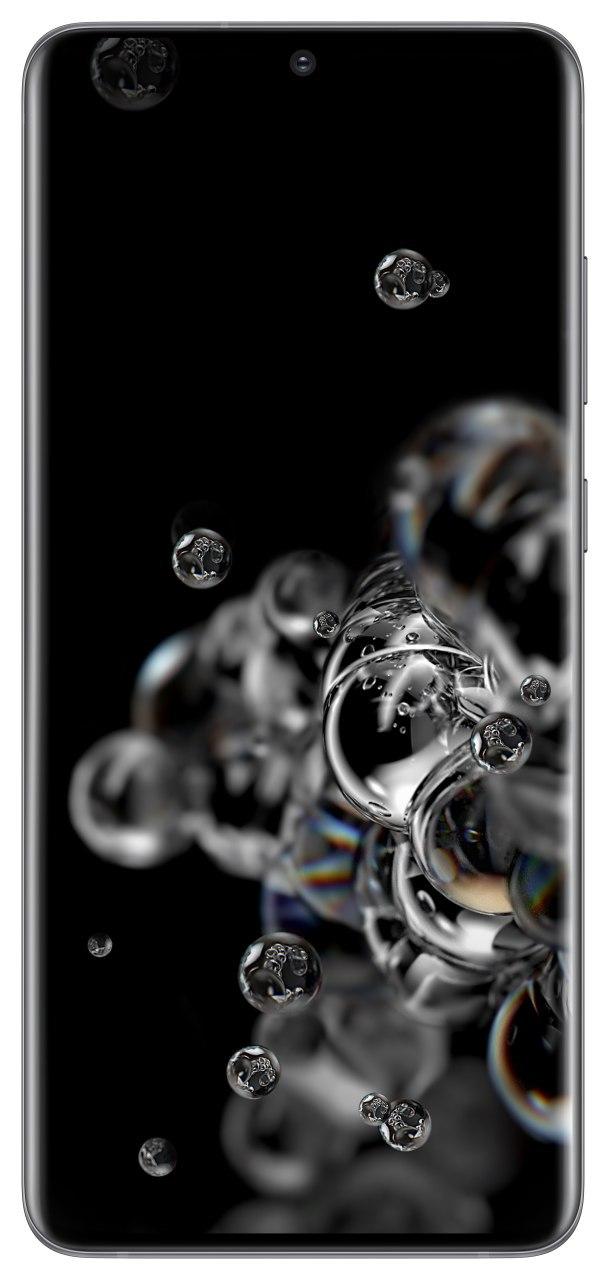
The Galaxy S20 has a laundry list of exciting features, including a stunning 120Hz AMOLED display, Snapdragon 865 with 5G connectivity, upgraded cameras with 3x optical zoom, and all-day battery life. There really isn't anything missing here, and if you want to be the first to use the latest phone tech, you should get your hands on the S20.

Samsung Galaxy Buds+

$149 at Amazon

Great audio quality, all-day battery life

The Galaxy Buds+ offer great audio quality thanks to a dual-driver design, and you also get significantly better battery life than the first model. The true wireless earbuds now last 11 hours on a full charge, and the charging case has enough power for another 22 hours. The best part is that you can charge the case wirelessly with your Galaxy S20 or any Qi wireless mat.

Samsung Galaxy S20 Ultra review: Too much of a good thing

Samsung's biggest and most expensive phone delivers in almost every way.

Galaxy S20 Ultra review

I've been through this so many times before. Samsung has a new flagship phone. It's undeniably better than its last flagship phone. And it's once again more expensive than its predecessor. The Galaxy S20 Ultra is taking that formula to an even higher level for 2020, with an absolutely massive screen and an all-new camera system that's a step above Samsung's other Galaxy S20 models. And the price? A big one: $1400.

But following up on a Galaxy S10 series that was pretty conservative, it's good to see Samsung really going for it with a super-high-end "Ultra" model this year. This is supposed to be the one for the enthusiasts, the fans, the nerds who all want the biggest and best Samsung can offer, no matter the cost. Honestly, it's pretty much the playbook the Galaxy Note series has followed.

Let's break down how well Samsung executes on the promise of an ultra flagship phone.

A message from this review's sponsor, ZAGG

ZAGG's InvisibleShield Ultra VisionGuard+ is ready for the most popular phones out there. Ultra VisionGuard+ protects your eyes from blue light without producing color distortion, kills 99.99% of surface bacteria, while of course also protecting your phone. Grab your screen protection now for 20% off using coupon code MOBILE20 for a limited time!

Get the ZAGG InvisibleShield Ultra VisionGuard+ now!

Samsung Galaxy S20 Ultra

Bottom line: Samsung went all-out with the Galaxy S20 Ultra, skipping concerns over size and price to just give you the biggest and best in all aspects. You get absolutely everything in this phone, with a glorious display and the highest-end specs. The new camera system is easily Samsung's best, and battery life is exceptional so long as you don't turn on the 120Hz display mode.

The Good

  • Huge high-quality display
  • Classic Samsung design and build quality
  • Incredible specs and performance
  • Extremely crisp main camera shots
  • Zoom camera has real use up to 15X

The Bad

  • In-display fingerprint sensor is slow and often finicky
  • Will be too big and heavy for some
  • Battery suffers badly with 120Hz enabled
  • Extremely expensive, but still has shortcomings
  • No headphone jack

$1400 at Samsung

Galaxy S20 Ultra Hardware and design

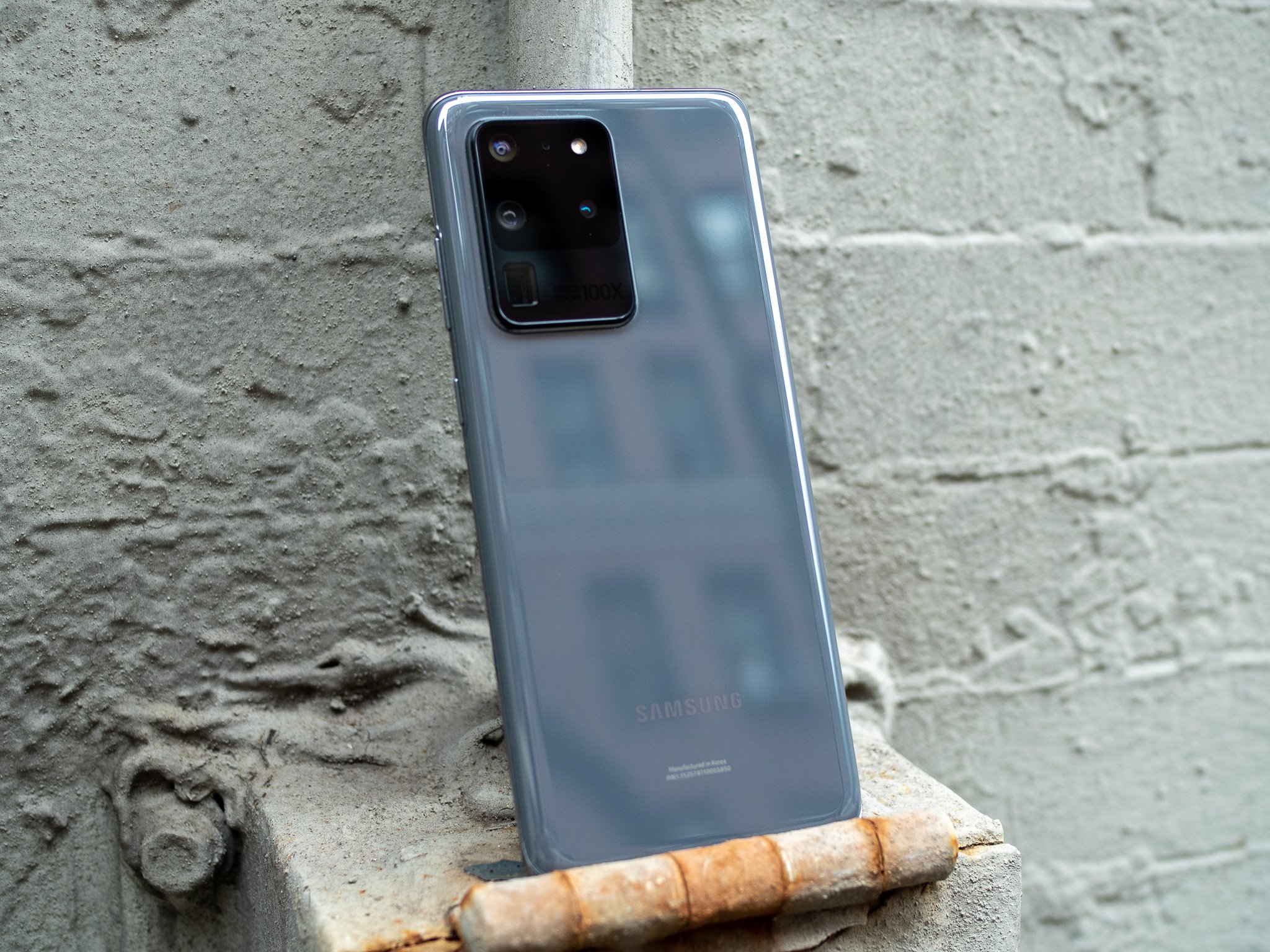
Let's get to it from the start: yes, the Galaxy S20 Ultra is massive. I spent several paragraphs discussing its size in my initial hands-on writeup. But this isn't at all to complain about the size of the phone, because there's no need to — if it's too big for you, you can simply buy a Galaxy S20 or S20+. This is more of a word of caution: don't just buy the S20 Ultra for its larger battery and improved cameras thinking that it's roughly the same size as the S20+, because it isn't.

The S20 Ultra is massive, by all measures. You need to be ready for that.

The S20 Ultra is the biggest and heaviest phone you'll find this side of the ASUS ROG Phone II, and that's not good company when it comes to ergonomics. It's about 18% heavier than the S20+, and the weight combined with its considerable height and width can make it unwieldy. I mostly managed it fine, but I also have large hands — many people may have to two-hand this one or use some sort of a PopSocket or phone ring. Moving on.

I would say that Samsung's design is a bit old and lacking new ideas, but the fact that the Galaxy Fold and Galaxy Z Flip exist fight that notion. Samsung can do new and interesting things with hardware, but it doesn't have to deploy it in its Galaxy S lineup — it's far better off making iterative improvements and refining what's already been incredibly successful for several years.

There's almost nothing about this design that stands out. But it is executed perfectly.

And that's what we have here. Viewed from the front or sides, there's nothing new or visually interesting. If it weren't for the massive camera protrusion on the back you wouldn't be able to tell which of the last five generations of Galaxy S this phone belongs to. It's the typical big panes of glass — now Corning's latest Gorilla Glass 6 — with a solid metal frame between. The glass has Samsung's usual tight curves on both sides, though it's more pronounced on the back.

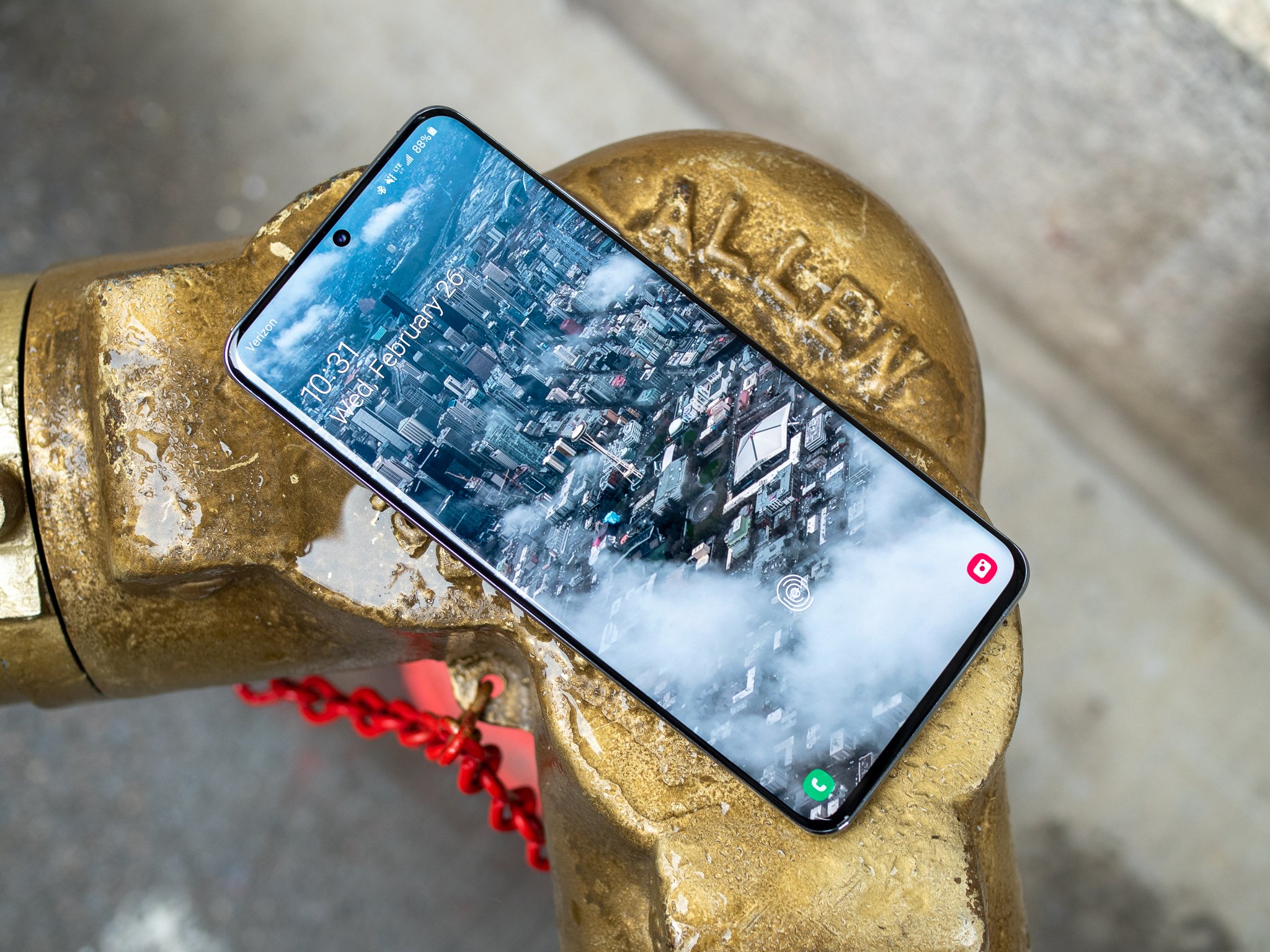
The front glass doesn't actually curve as dramatically as with previous devices, though the effect of providing an "infinity" edge is the same because it has shrunk the screen bezels even further. And I appreciate it, because it makes Android 10's side gestures easier to use. Add to that the new single front-facing camera cutout that's centered, and there are even fewer visual interruptions to enjoying this screen.

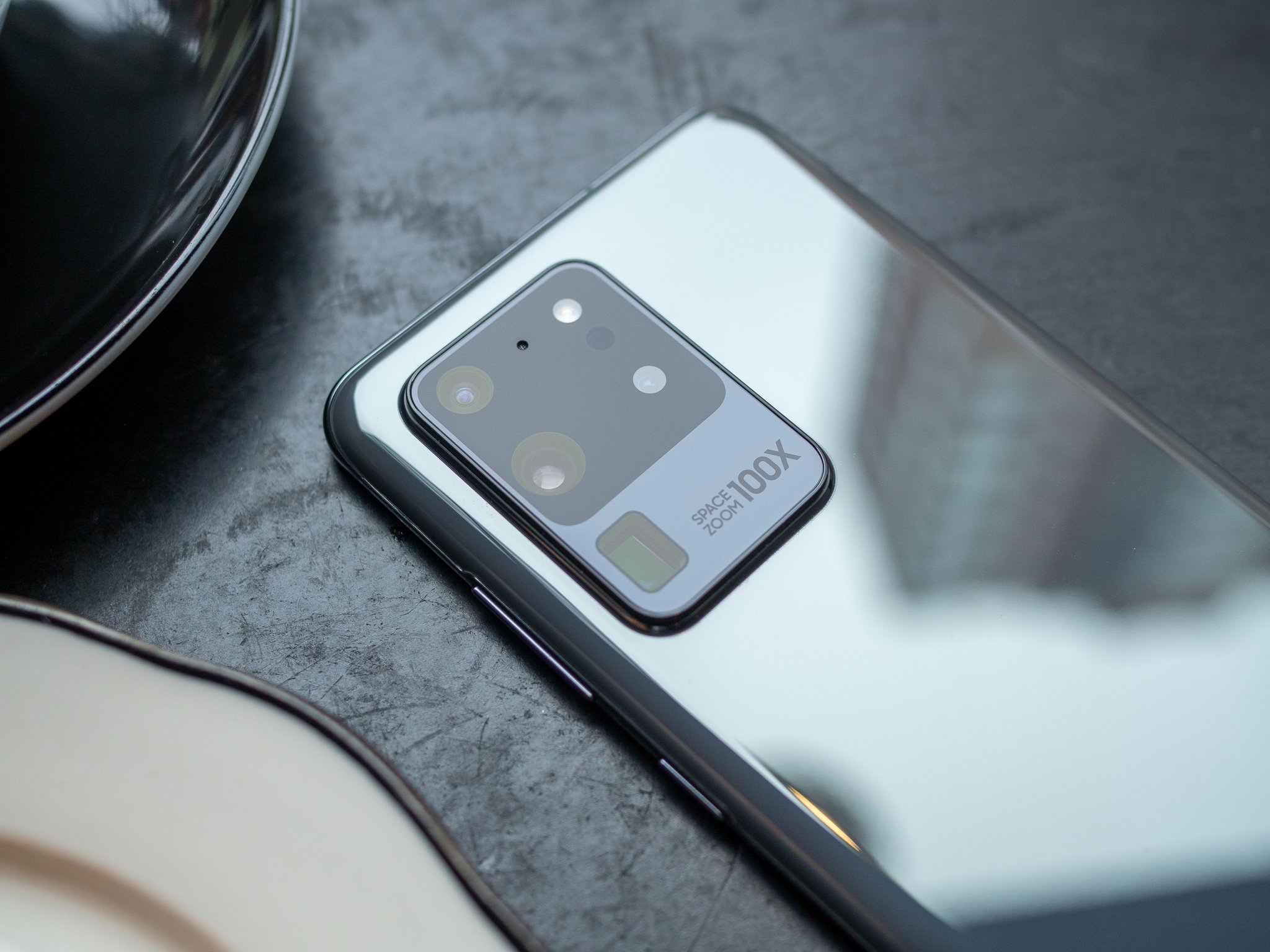
The size of the camera bump is an annoyance physically, and in what it does to the vibration sounds.

Just because this isn't particularly exciting design doesn't mean the execution isn't great. Samsung's fit and finish is top notch, the materials all come together perfectly and it feels solid — more so in the S20 Ultra than the other models considering its size. Assuming the phone isn't too heavy for you, the heft translates well to a feeling of quality.

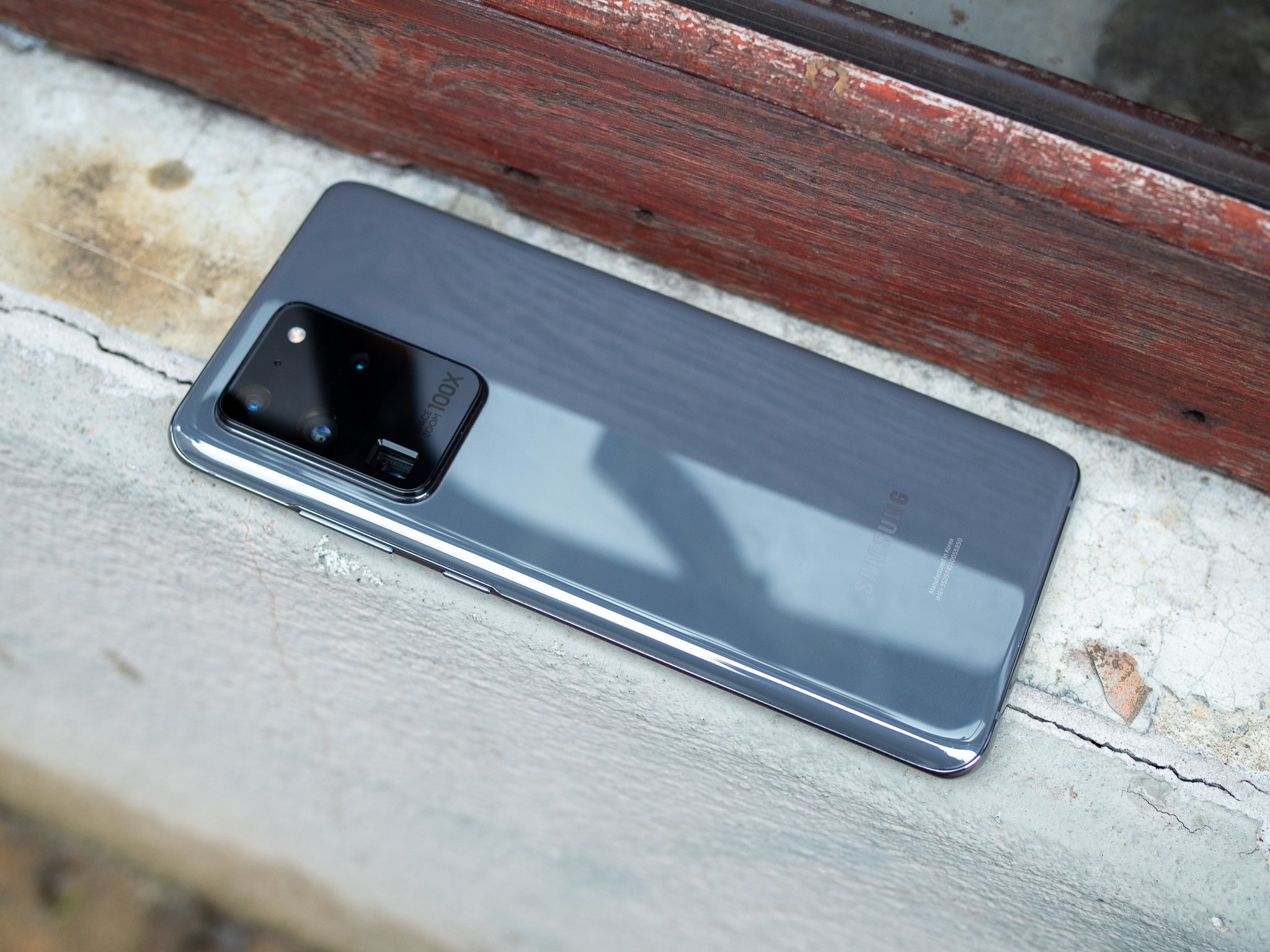
The only blind spot in the design is a practical one — in two senses of the word. The rear camera housing is huge, because it has to be for four distinct camera sensors and one extremely large zoom lens that uses a prism to even fit in this size. But even in this thicker-than-most phone, the camera bump sticks up a couple millimeters further, and is wide and tall even in the proportion of this wide and tall phone.

It's so big that it makes the phone rattle horribly loud on any flat surface when it vibrates, even when I turn the vibration way down. It also sticks out enough to actually get hung up on the edge of my pants pockets. This phone deserves a case, if for no other reason than to minimize how much that camera bump sticks out.

Galaxy S20 Ultra Display

Samsung's last top-end display, in the Galaxy Note 10+, was already a pristine example of everything we wanted from a phone screen. And then, Samsung one-upped itself with the Galaxy S20 Ultra. I couldn't find a single negative mark on this screen. It's exceptional in brightness, colors, viewing angles, reflectivity and every other part of the display experience that matters.

This is an exceptional display, and you get more of it than on any other Samsung phone.

The Ultra's display is ever-so-slightly larger than the Note 10+, at 6.9 inches, making it Samsung's largest ever smartphone display. But this isn't all about marginal improvements in qualities and size, it has one massive advantage in that it doubled the refresh rate to 120Hz, which is the latest frontier of display smoothness. By doubling the refresh, every single bit of motion on the display is impressively smooth.

You obviously notice it the most when scrolling through feeds and lists, but it applies subconsciously to every bit of movement and every animation — opening apps, pulling down the notification shade, sliding in side drawers and everything else. It's just pleasing to the eye, and you're quickly spoiled by it in a way you don't realize until you go back to a 60Hz screen. Obviously your eyes re-adjust to 60Hz in a similar way, but I just love the look of 120Hz anytime I have it on.

The 120Hz mode is only available at the default FHD+ resolution — if you want to max out to the full capabilities of the display at QHD+, you drop all the way back down to 60Hz. But that in itself is a fine trade-off; even if you're sticking to 60Hz, I don't see a reason to up the resolution. I know my eyes aren't what they used to be, but I cannot tell that this phone is running at "only" FHD+ resolution out of the box.

Galaxy S20 Ultra Software and performance

When it comes to high-end phones, it's just a given that software performance is going to be exceptional. With a Snapdragon 865 and 12GB of RAM, there wasn't a single moment of hesitation or even a suggestion of a slowdown in anything I did with the phone. Samsung now lets you "lock" three apps into memory so they won't be closed, but I didn't even find this necessary considering how much memory is on tap and how quickly apps re-open. You're going to be able to throw anything you want at this phone for the next two years without issue — it's incredibly over-built.

Complete Galaxy S20 series specifications

Performance will never be an issue on this phone, no matter what you need to do.

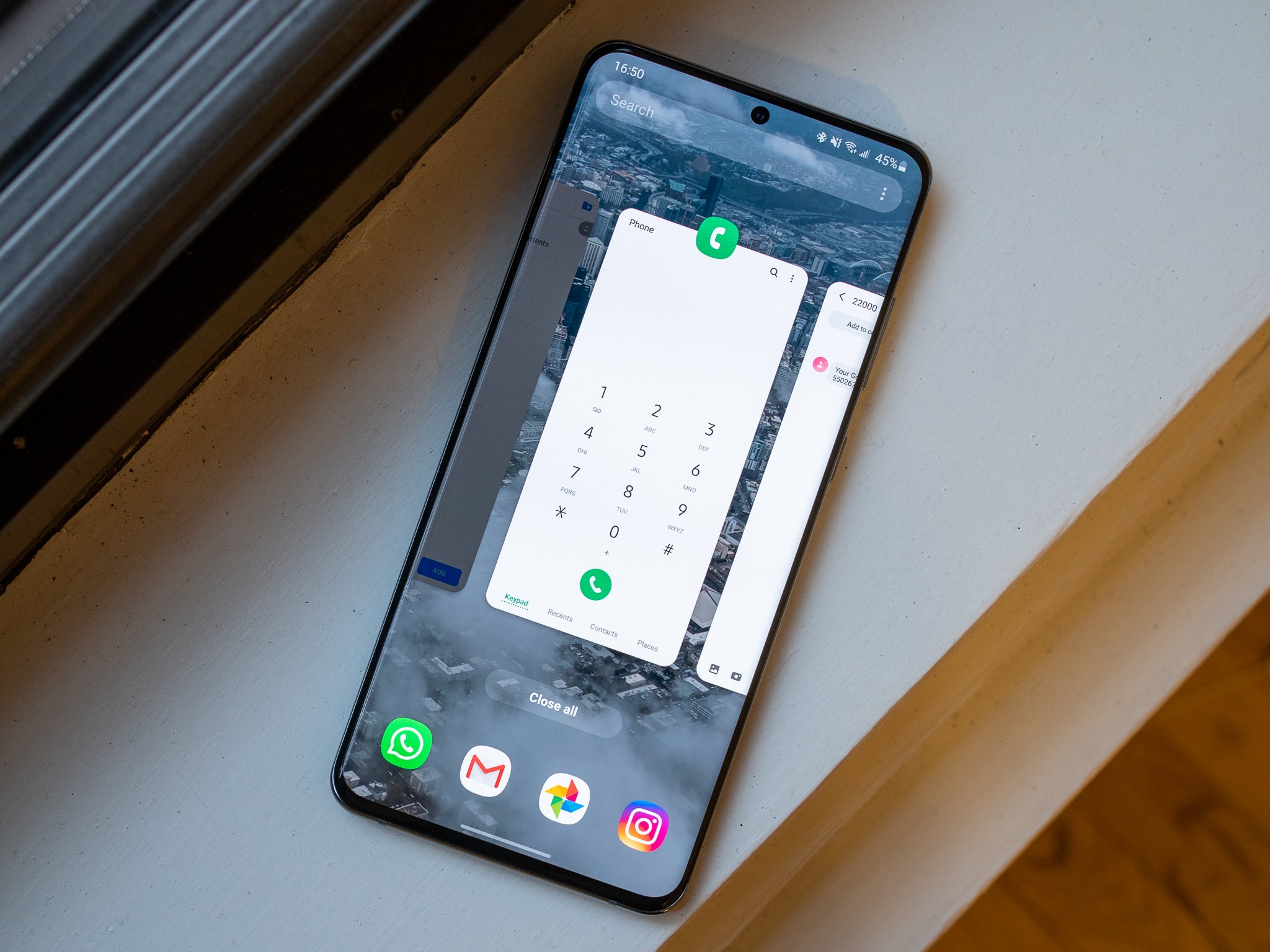
The One UI 2 software, built on Android 10, will be familiar to anyone who's used a Samsung phone in the last few months. Outside of a few small tweaks, this is the same software that's been sent out in an update to the last two generations of Samsung flagships, and that's generally a good thing. Samsung's software still suffers from feature bloat and duplicate apps, but it's fully manageable if you're willing to get in there and turn off or tweak everything you don't want. And at the same time, it's done a really great job of integrating Android 10's new features.

Samsung has also integrated Google Duo video calls directly into the dialer, meaning you get a seamless video call button right next to the regular call button when dialing someone who has the app. Better yet, video calls are 1080p, which look great. I'm constantly surprised by Duo's ability to keep video quality high even on mobile data, and having it integrated into the dialer rather than in a separate app is a huge improvement — this sort of thing is just a feature, not worthy of a separate app.

With all of the focus elsewhere, we can't forget that the headphone jack is now gone.

The Galaxy S20 series may have lost the headphone jack, following in the footsteps of the Note 10+, but it still retains solid speaker quality. Like its previous phones these aren't equally-sized stereo speakers, but the combination of the down-firing loudspeaker and over-driven earpiece provide good enough separation and plenty of volume — though at the higher levels you feel a fine rattle in the back of the phone that's jarring. On the other hand, you get no rattling from the haptics engine, which is solid for force-feedback in all interface actions. I just turned down the intensity a few clicks from default, and was very happy with the haptics.

The only part of the daily experience that's a major issue is the fingerprint sensor. This is the same sensor as the Galaxy S10, which is to say it's not good. I gave the Galaxy S10 a break for its slow and inconsistent fingerprint sensor given it was early in the life of in-display sensors — but in the last year things have gotten a lot better and Samsung has to be called on using inferior technology here. The sensor is slow to respond, whether it's accepting or rejecting a print, and the recognition area is really small. Thankfully it's been moved up slightly to be easier to reach naturally, but it's still a weak point of this hardware and a baffling decision when there are much better components out there.

Galaxy S20 Ultra Battery life

With a super-efficient Snapdragon 865 platform and huge 5000mAh battery, the S20 Ultra should have exceptional longevity compared to the Galaxy S10+. But there isn't a single answer to "how's the battery life on the Galaxy S20 Ultra?" — because it heavily depends on whether you're using the display in 60Hz or 120Hz mode.

As I made abundantly clear, I love the look of the 120Hz mode. But now I know why it isn't turned on by default: it wrecks the battery life on this phone.

120Hz mode looks amazing, but absolutely destroys your battery life. It's a shame.

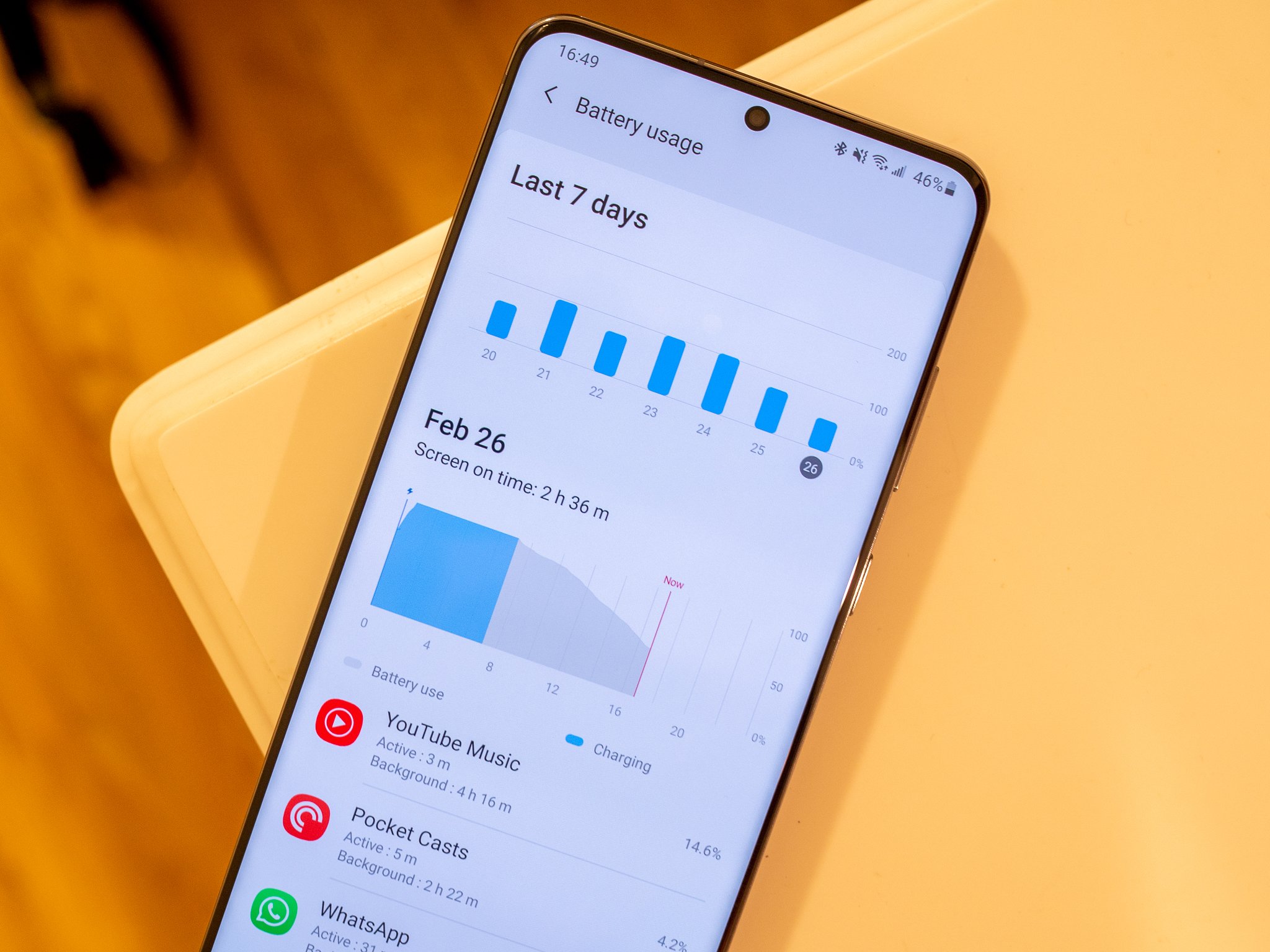
With 120Hz turned on, I saw a 20-30% reduction in total battery life over the course of the day, and makes your battery life dramatically more dependent on how much your screen is on. With just 3 hours of "screen on" time in a day, 120Hz doesn't have an outsized effect on battery life and you can make it through a day fine. But if you step up to 4 or 5 hours ... you're not going to finish the day without charging. With 120Hz enabled, and 5+ hours of screen time while shooting our review video, I hit 10% battery in just 12 hours multiple days in a row. That's downright bad for a battery this large.

Testing from Tom's Guide shows just how much the switch hurts battery life, with their browsing test (which keeps the screen on the entire time) taking a 3-hour, or 25%, hit when switching to 120Hz. And for what it's worth, in their testing the S20 Ultra, even at 60Hz, performed weaker than the S10+ with its 18% smaller 4100mAh battery.

After days using the 120Hz mode, and loving the screen but hating the battery life, I reluctantly switched back to 60Hz and saw an immediate change. All of a sudden it started performing just like my Galaxy S10+ did: battery life was predictable, and long. 4 or 5 hours of screen time was no problem, and still left me with 20% battery at the end of a long day. It's an unfortunate trade-off to have to make, but I'll be using my S20 Ultra in 60Hz mode so that I can use it without thinking about battery life whatsoever.

If I give up and use 60Hz, my battery life is spectacular.

I seriously hope Samsung has an update in the works to include some sort of a "dynamic" refresh rate mode that can let the phone ramp up and down the refresh rate as needed to fit the content on screen. With this dramatic of a power drain from switching to 120Hz, it's clear the phone is constantly running at that refresh rate — which is wholly unnecessary, you don't need to be running at 120Hz when viewing a static image, or watching video that's only in 30 or 60 fps anyway. I hope Samsung can figure it out, because if it can't, I'm stuck on 60Hz.

Charging back up is a quick endeavor, though, even with this big battery. The in-box charger gets the phone from 1% to 60% in just 30 minutes, and takes only another 35 minutes to get the rest of the way to 100%. That's great considering this isn't even the maximum charge speed the phone can take — you can speed it up further with a 45W charger. And of course you can charge slower on a wireless pad, which in itself is still pretty quick if you go with one of Samsung's own chargers.

Galaxy S20 Ultra Cameras

The sheer size of the S20 Ultra goes hand-in-hand with its camera capabilities — Samsung had a ton of room to work with, and even still it had to introduce a huge camera bump. That's because the S20 Ultra's camera set is even an upgrade over the standard S20 and S20+, with a 108MP main camera, 48MP telephoto camera with up to 100X hybrid zoom, and a 12MP ultra-wide camera (same as the S20) to complete the set.

Main camera

This is clearly a massive leap forward in sensor technology for Samsung, dropping a system it was using for years in favor of a dramatically larger sensor that's able to use 9-to-1 pixel binning for a huge effective pixel size to output 12MP shots. It's capturing substantially better low-level data and dramatically more light, which translates into better photos than the last generation.

This camera has excellent fundamentals, but also a bunch of Samsung's historical camera quirks.

But there's a problem: it still feels like it's passing that data through very similar processing. These still very much look like "Samsung" photos, with all of the typical Samsung quirks and features — the effects of which are simply reduced by the fact that it's starting with a great big sensor.

Samsung still loves to aggressively sharpen photos, which often makes things look great but sometimes goes overboard and crushes details into a blotchy and rough mess — and the problem is made worse in low-light photos. In indoor scenes it still over-smooths faces to an unnatural state, though I found it to be great with skin in good natural lighting. I have particular distaste for Samsung's approach to HDR, which feels stuck in the past. There's little subtlety to the way HDR processes photos; it's either off or fully on. You so often get over-saturated colors, blown-out highlights, over-brightened shadows, and bright halos in any shot with a sky.

Night mode goes overboard with processing, but thankfully auto handles low-light shots well.

In low light, Samsung's Night mode can produce real winners, but that's the exception and not the rule. For the most part it takes so long to capture — between 5 and 20 seconds in my experience — that it's impossible to hold your hand steady enough to get a crisp shot. And it typically results in a photo that has blown-out brightness and an overly-warm white balance. Thankfully auto mode does surprisingly well in low light, taking balanced shots with just the right amount of brightness and good colors while retaining super-sharp lines and details.

But just like daylight shots, you can get the occasional swing-and-a-miss with a super-blurry or over-sharpened subject that isn't worth saving. Low light photos are hard, and even though the specs of the camera sensor should let Samsung take best-in-class low light photos it still isn't up to the consistent levels of performance Google has set. Some early Galaxy S20 Ultra users have had issues with auto focus constantly searching and not being able to lock on a subject, and though I haven't seen the issue beyond a few isolated cases Samsung has already said it plans to release an update to address the problem.

I want to love this camera, because it takes amazing photos, but its inconsistency is frustrating.

The camera is ultimately very frustrating, and I'm being hard on it here because I want to love it. Because I can both take amazing photos that easily match, or even beat, the Pixel 4 XL ... and then also take complete stinkers that I wouldn't even save in my gallery, let alone share. Look at that gallery of photos above. Every single one is a great photo that I'm incredibly proud of and don't hesitate to share. Colors, detail and dynamic range are all excellent, and this camera generates incredible natural bokeh.

But you don't see all of the photos I took before and after that were lackluster or downright trash. For all of Samsung's camera issues in the last couple generations of the Galaxy S series, they were incredibly consistent: I knew what I was going to get, and knew where its shortcomings were. With the S20 Ultra the shortcomings are a moving target, and I don't have as much confidence that I know what I'm going to get when I hit that shutter button. The ceiling is incredibly high, but the floor is also incredibly low for an expensive top-end phone.

Telephoto (zoom) camera

You can get great 5-10X zoom shots that have the same characteristics as the main camera.

The S20 Ultra's massive "Space Zoom" lens offers optical 4X zooming in front of a 48MP sensor, offering "lossless" 10X zoom and an aggressive digital crop thereafter. That tells you most of what you need to know here: this camera can take really good shots at up to 10X, and then things drop off precipitously when you go beyond that.

After getting over the initially jarring effect of the "telephoto" button taking you straight to 5X, I really enjoyed shooting zoomed shots with this camera. The quality doesn't match the main sensor, but the new perspective offered from the tighter field of view is worth the trade-off. Anywhere between 5-10X I took really solid shots that I enjoyed, and even though they have the same mixed bag of issues I mention above, there's no other major shortcoming of the zoom shots. Even low-light and indoor shots were good at 5X, and the zoom lens still produces fantastic bokeh if you set it up right — though the one wrinkle in both of those situations is a long minimum focal distance, about three feet.

I was able to take a few shots at 20X and even 30X in perfect lighting conditions with subjects a good distance away that I liked, but there's a clear drop-off in quality that shows you took a highly cropped photo. The full extension to 100X has zero use, as it looks like you've recreated the scene using LEGO blocks, so don't let Samsung's branding or marketing sway you there. But if you ignore all of that high zoom stuff, and just focus on the quality at lower levels, Samsung's absolutely doing things right here.

Ultra-wide camera

I'm very happy to see Samsung keep the ultra-wide camera around while it focused so heavily on zoom this year. The camera has improved from last year, too, in a notable way. In good lighting, ultra-wide shots don't look far off the quality of the main camera, which is high praise for a sensor playing second fiddle. In low light you're let down by the smaller sensor and f/2.2 aperture, which is to be expected, but at least the shots in good-to-mixed lighting don't fall flat.

Having the freedom to shoot everywhere from this ultra-wide all the way up to 10X zoom makes the S20 Ultra an incredibly versatile camera system.

Front-facing camera (selfies)

The new 40MP front-facing camera lets you take full-res 40MP shots if you really want them, provided you're shooting in perfect lighting, but otherwise you're best off sticking with the 4-to-1 pixel binning to 10MP shots. Selfies are good anytime there's enough light, so you'll always do well outdoors and during the day.

The only issue comes in low light, where the camera still falls flat as you'd expect for a tiny front-facing sensor. In dark indoor environments or at night outside, selfies turn into a grainy and blotchy mess. Nothing can match the Pixel 4's use of Night Sight on the front-facing camera, it seems.

No matter the scenario, there are a few things you can do to really take the best S20 Ultra selfies. Turn off the beauty mode, which way over-softens facial features. Turn on the 2-second timer, so you can press the shutter button and then steady your hand before the shot is taken. And turn on the screen flash when taking a low-light shot — it's annoying, but it really helps this little sensor.

Video (8K, 4K, and stabilized)

Short section here, because Samsung hasn't made as big of leaps in these areas as it has in the others. On the video front, the big move is to 8K 24 fps video, which is great for marketing but completely unnecessary for anyone to use in the real world. The number of people with a TV that can play back 8K is so tiny, this is no more than a tech demo. Thankfully you can also get really good 4K 30 or 60 fps video, as well as 1080p 30 or 60.

The "Super Steady" video stabilization has been improved to add roll stabilization, and while it's incredibly smooth for situations where you're walking, riding a bike, in a car (passengers only!) or tracking an object moving in one direction, I actually saw it regularly drop frames and stutter when trying to pan around or move back and forth in multiple directions. Funny enough, the regular stabilization shooting at 1080p 30 or 60 was nearly as smooth, with zero dropped frames. (I've contacted Samsung regarding this issue.) And when you turn Super Steady off, you get back the ability to use the ultra-wide camera and zoom up to 20X. So I'd rather stick with basic 4K or 1080p for video here.

Using 5G can be frustrating

This review is applicable to anyone using the Galaxy S20 Ultra on any carrier in the world. But with expanding 5G networks, the combination of which carrier you're on and where you live can make a big difference in your phone experience. That's why I found it fitting to provide my latest observations of 5G in a section separate from the rest of the review.

I've been using Verizon in New York City, and it's been incredibly frustrating. Verizon's mmWave 5G network, despite the intense spending on billboards, online ads and commercials, is tiny. On one hand it's impressive that Verizon is being so transparent about its coverage that it can give you down-to-the-street coverage maps. But the reality is that when your coverage map has to be that granular, that's not "coverage."

Verizon has 5G you can measure in patches of a few hundred feet long certain blocks in the city. Disparate streets, intersections, parks, and plazas. The situation is better in some other cities with fewer obstacles and infrastructure issues than NYC, but it's still not particularly rosy. The coverage is ultimately limited to outdoor areas, and hyper-localized to where Verizon can pepper the area with several mmWave antennas. And even when you are in a 5G coverage area, simply which way you're facing, even standing in the exact same spot, can make a difference of 30% in your download speeds.

I shouldn't have to go stand on a street corner to 'find' 5G — and that's what's required on Verizon right now.

After a couple days regularly seeking out 5G, I just stopped caring. I never had a 5G connection surreptitiously when I wasn't expecting it — the only time I ever had it was when I went looking for it. I checked the coverage map, walked to that specific street corner (remember, always outdoors) and stood there as I saw the network indicator switch from LTE to UWB ... and ran a speed test to make sure it's working. There's nothing I want to be doing standing on a sidewalk in NYC that requires 5G speeds — even if they are anywhere from 500Mbps to 1.5Gbps in my testing.

Obviously the situation will be slightly different based on where you live. And could be entirely different if you're on T-Mobile's wide-reaching (but much slower) Sub-6 5G network. But the hit-or-miss nature of Verizon's 5G network at this point has been a reminder that I need to think of this phone as an LTE device for now, with a 5G radio that's ultimately dormant and set to be utilized perhaps 18 months from now. That's a nice bit of knowledge to have, as it's an expensive phone you may hold onto for 2-3 years, but right now it's not a factor one way or the other in my recommending the phone.

Another message from our sponsor, ZAGG

ZAGG's InvisibleShield Ultra VisionGuard+ is ready for the most popular phones out there. Ultra VisionGuard+ protects your eyes from blue light without producing color distortion, kills 99.99% of surface bacteria, while of course also protecting your phone. Grab your screen protection now for 20% off using coupon code MOBILE20 for a limited time!

Get the ZAGG InvisibleShield Ultra VisionGuard+ now!

Galaxy S20 Ultra Should you buy it?

Samsung went all-out on the Galaxy S20 Ultra, and set itself an extremely high bar by pricing the S20 Ultra at $1400. And for the most part, it delivered on its promises.

Samsung went all-out on the Galaxy S20 Ultra, and delivered in so many ways.

The hardware feels every bit worth the money, and there's no doubt that the specs have what it takes to handle anything and everything you want to do on a phone — both today and two years down the road. It has all of the hardware features you want, an incredible display, and no-concern all-day battery life. The cameras are also a big step forward for Samsung, with the ability to match Google's quality in a variety of lighting conditions, plus a good wide-angle camera and high-quality zoom shots. And the only thing you gave up from last year was a 3.5 mm headphone jack.

But there are shortcomings here, and it's hard to be forgiving at this price. The S20 Ultra is absolutely huge, and that's going to immediately rule it out for many people. Its 120Hz display mode is wonderful, but turning it on erases that great battery life I just praised. And the cameras, while capable of amazing photos, are less consistent and still stumble more often than I'd like. And for this advanced and expensive of a phone, I shouldn't have to deal with last year's bad fingerprint sensor technology or just 128GB of storage.

4 out of 5

This is a phone for the biggest phone enthusiasts, who care about having more no matter the cost.

The question of "value" is always a funny one, because each of us has a different idea of what an appropriate price is for a phone. But no matter what, if we just look in real terms of how much phones have cost up to this point and compare it to the S20 Ultra's $1400 starting price, this thing is expensive. Purchased on a typical carrier financing plan, it'll be nearly $60 per month. If price is a factor for your phone purchase, you should be looking at the standard Galaxy S20 or S20+ instead.

But for some, price doesn't mean as much as what you can do with a phone. And the Galaxy S20 Ultra enables you to do a whole lot. It's Samsung's don't-hold-back top-end phone, and what it's capable of is impressive. Like many Galaxy Notes before it, the S20 Ultra isn't going to be the phone that appeals to everyone; it's the phone that appeals to the enthusiasts who want more and are willing to handle the trade-offs.

Samsung's biggest

Galaxy S20 Ultra

$1400 at Samsung

The "cost is no factor" choice ... provided you can deal with the size and weight. An impressive camera array and a massive battery sit underneath Samsung's biggest screen. Plus, an option for 512GB storage and 16GB RAM.