appnext

Sabtu, 29 Februari 2020

Carrier fines over selling location data aren't enough

A $200 million fine means carriers still made money selling our location; and since it was ours, do we get a cut?

The FCC has finally stepped up and fined the four major U.S. carriers — AT&T, Sprint, Verizon, and T-Mobile — $200 million for selling real-time live customer locations to third-party resellers without user consent. Stepped up is a slight exaggeration because a small fine is more like the cost of doing business than any sort of deterrent. Yes, $200 million is a small fine when you consider how much data was sold and how much even the smallest of the Big Four carriers is actually worth.

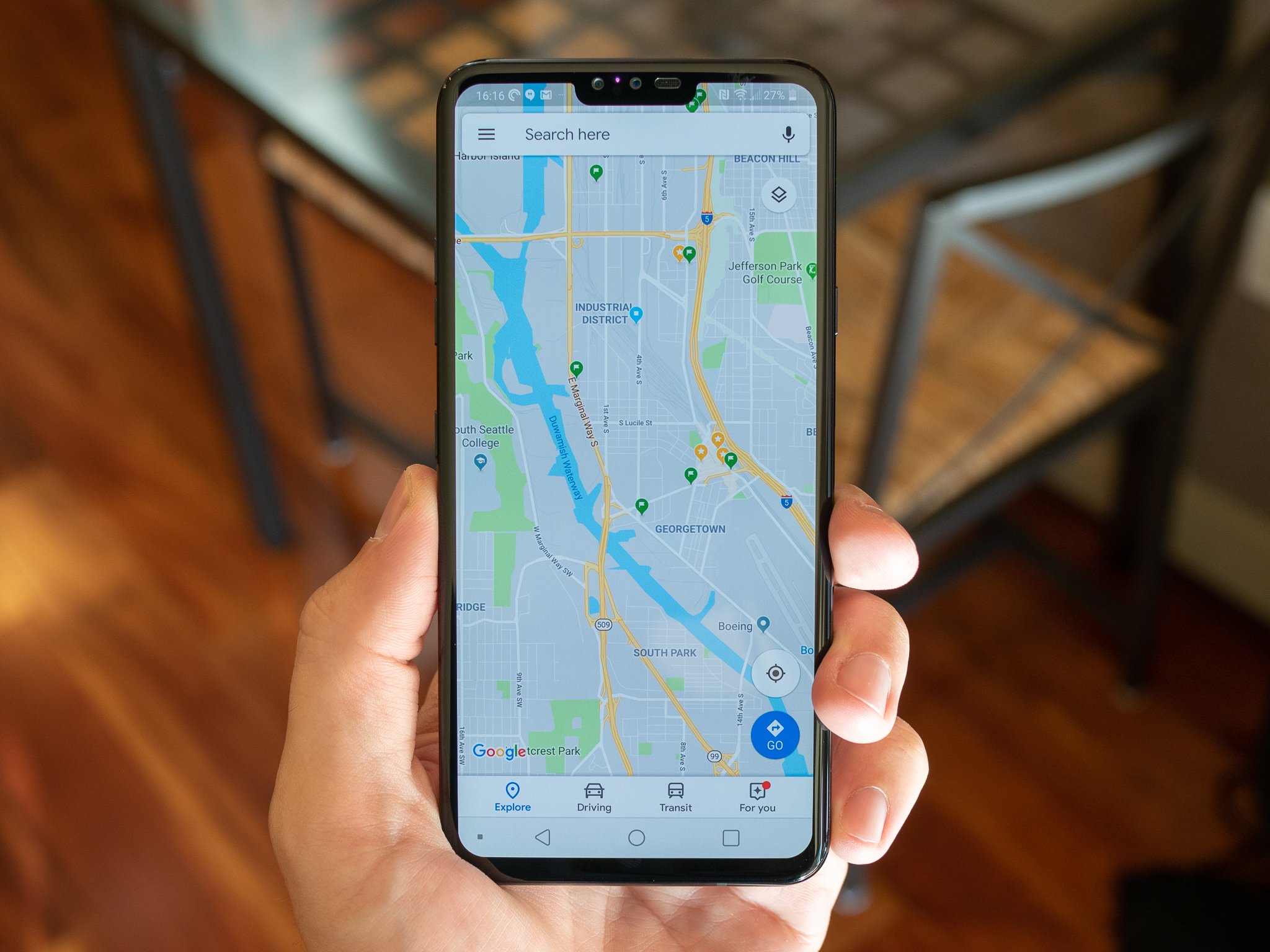
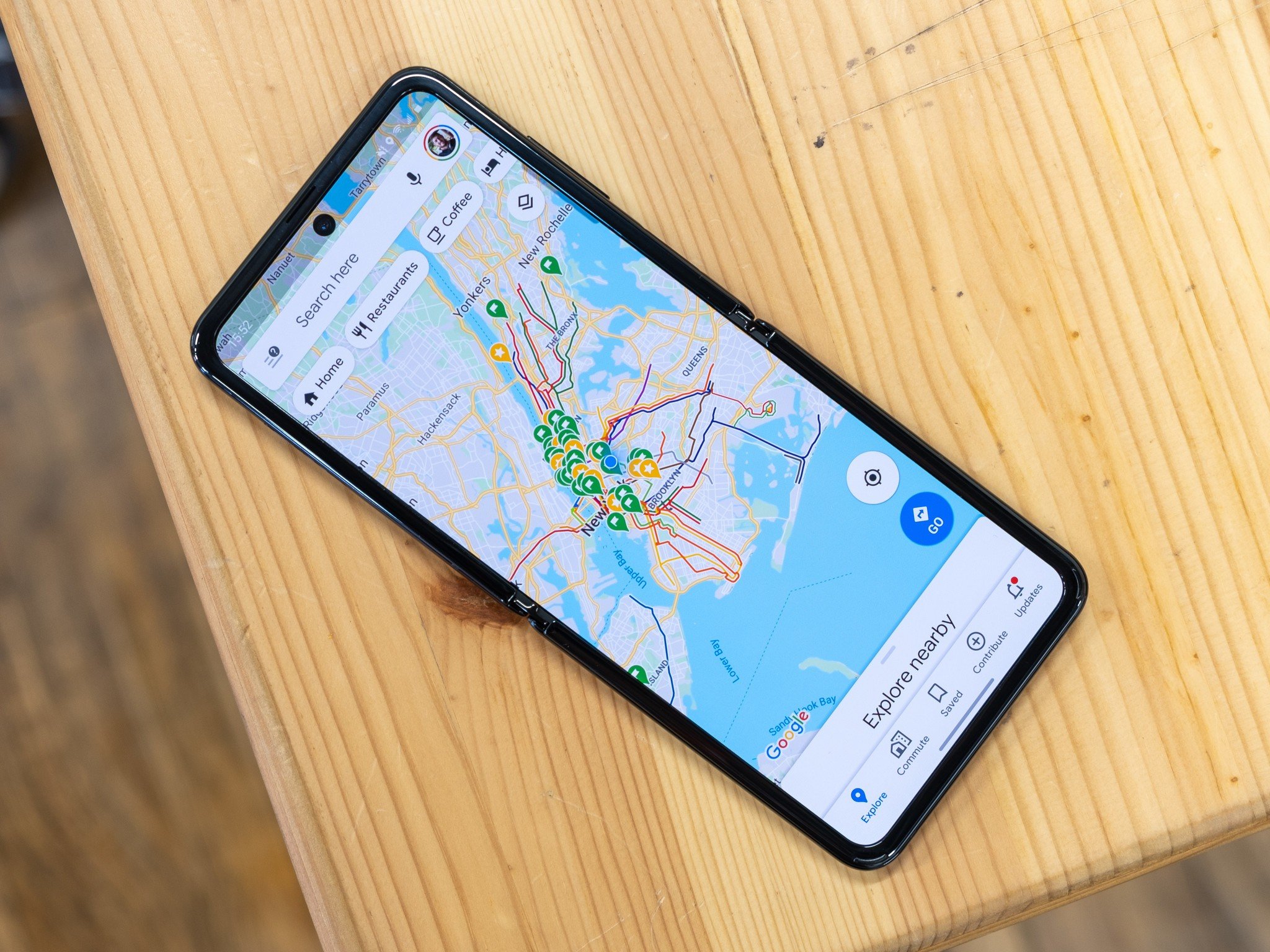
Here's the gist of it all, in case you're not aware of what's going on: in 2018 it was discovered that all four U.S. carriers were selling live customer location data to third-party services like Zumigo or Microbilt (dubbed "shady" companies by privacy organizations). These companies then resold that same data to people like bounty hunters, used car salesmen, and debt collectors.

Your data is worth exactly $8.42 to your cell provider. That's bullshit.

To make matters worse, some of these clients would, in turn, resell the data again to private individuals. If I had an extra $300, I could buy information about where you are right now from the right person. Scary, right?

There was money to be made because it was perfectly legal for the carriers to sell you like you would sell your old sofa on Craigslist and because buying in bulk could get location data as cheap as $8.42 per customer. Paying $8.42 for something you can resell for $300 is too tempting for shady companies who are happy to exploit each and every one of us. Even our kids.

A fine is the right thing. Now up the amounts, please.

After a year of bickering (because that's what governments do best) we find out that the hammer is coming down and carriers are going to be fined. Too bad the fine is less than a slap on the wrist; $200 million to Verizon is like $10 you most of us, just Starbucks money.

What should have happened is carriers be forced to hand over every customer number that had information sold this way, and the fines split among them all. After the fines are increased to the level where it's a financial burden so carriers will think twice before they sell our data. And that's being gentle, because nobody wins if the carriers are driven out of business over this as they should be.

Nothing is sacred
I sound pretty passionate about this, I know. But I don't think I sound unreasonable.

That was our data. We have the right to expect it to be our private data. I take no issue with carriers being able to access our real-time location for legitimate reasons. The 911 system, or network diagnostics, or complying with a lawful warrant come to mind here. But doing it as a cash grab isn't something any of us agreed to, especially when it was done under the table.

Why bother trying to protect your data when your carrier sells you out?

Most smartphone users have and use a secure lock screen. Many take further measures and use 2FA or take advantage of granular access permissions for apps. We allow Google to collect so much data because it has proven how much it values the data itself and has always abided its side of the terms of service. And when some company or someone finds a way to exploit a thing like location data, Google makes changes to the way that data is retained and handled.

Two-factor authentication: Everything you need to know

But when carriers can sell you out, why bother? We're not Holstein dairy cows that can be milked anytime a new way to make money is found. Our milk isn't free, and we're owed something for being used.

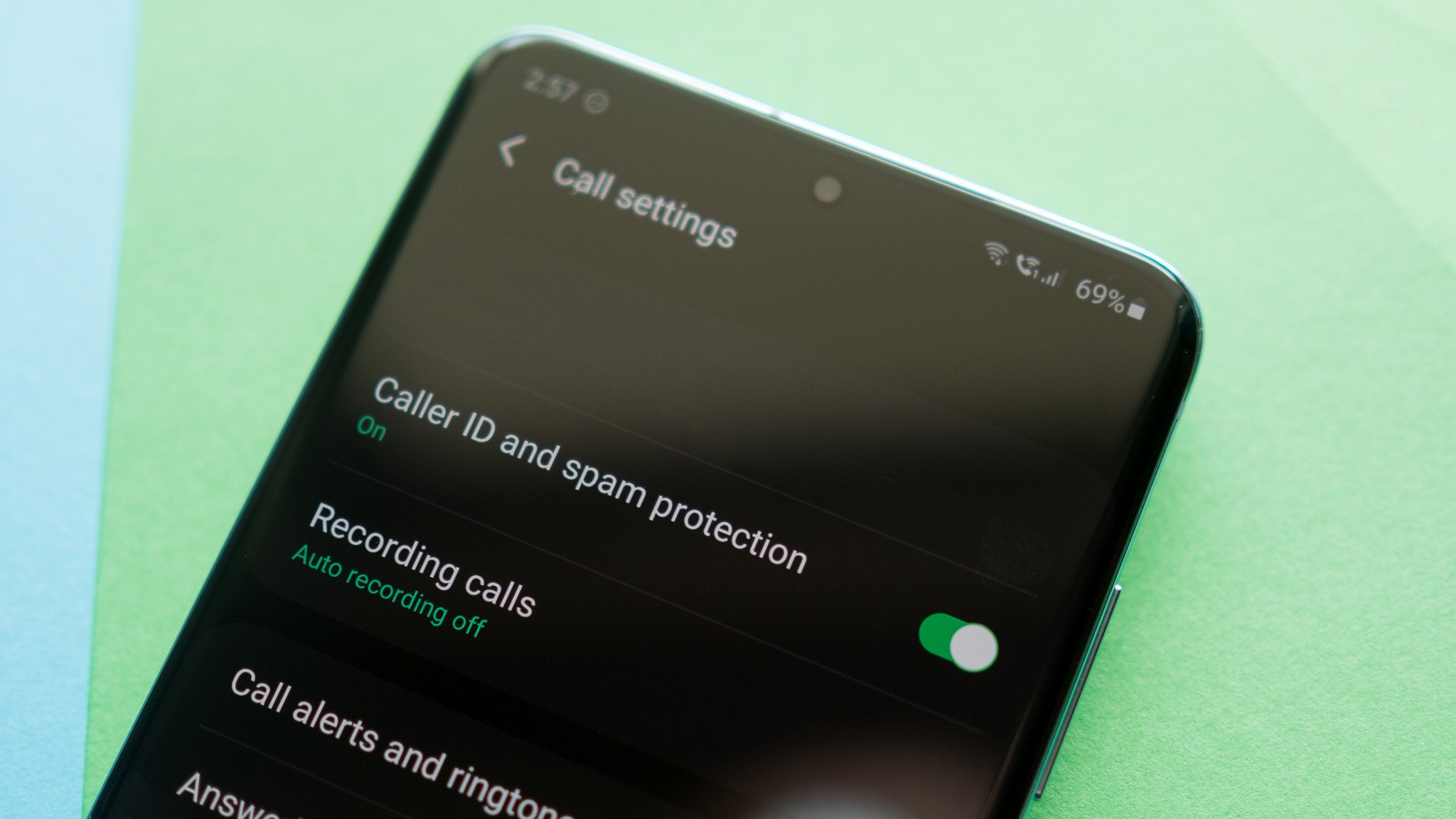
How to enable Caller ID and spam protection on the Galaxy S20

Spam calls are a real nuisance, and thankfully there are services that do a great job weeding out robocalls and spam numbers. The Galaxy S20 has a spam protection service integrated into the dialer, and here's how you can get started.

Products used in this guide

How to enable Caller ID and spam protection on the Galaxy S20

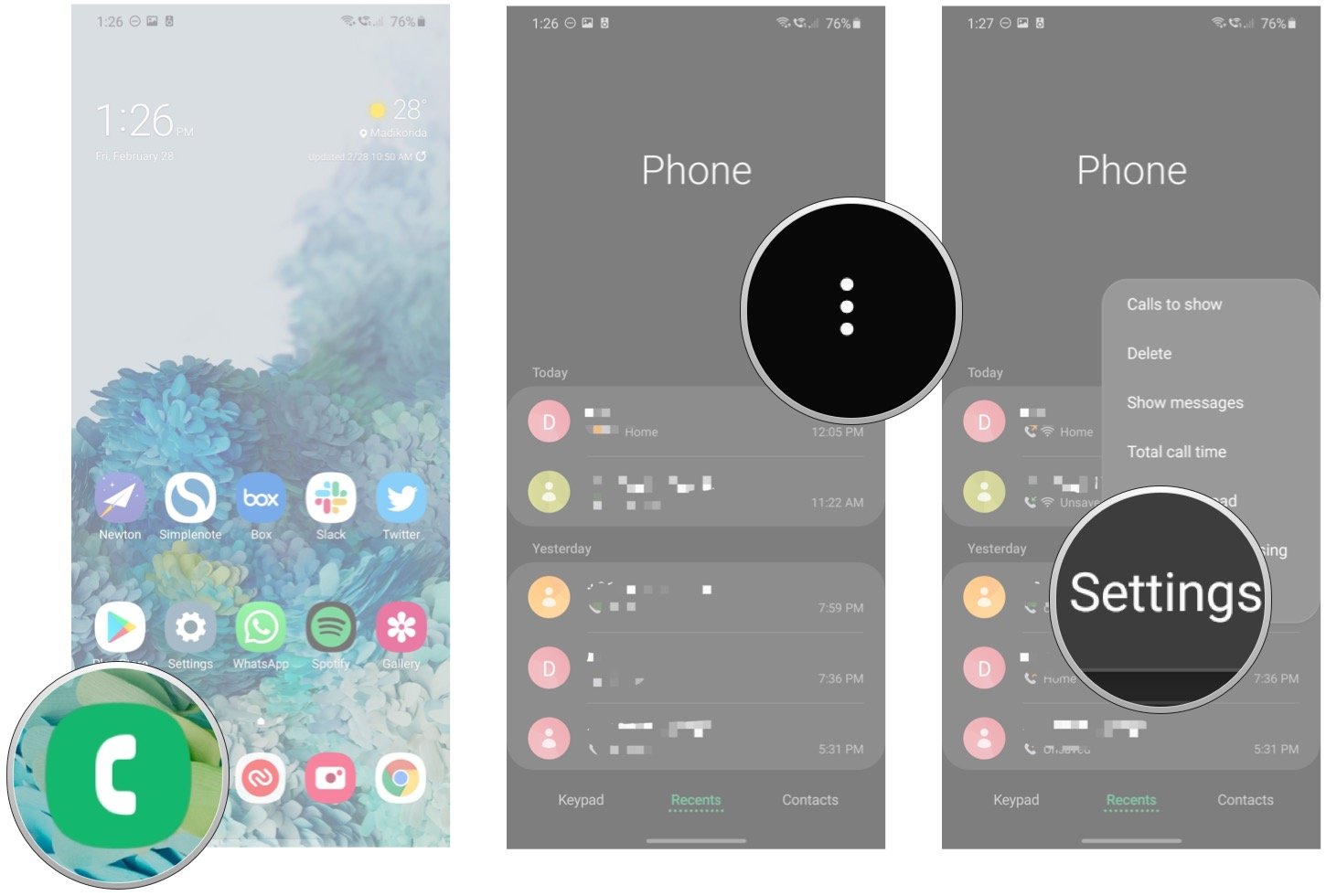
  1. Open the dialer from the home screen.
  2. Tap the overflow menu (three vertical dots on the right).
  3. Choose Settings.

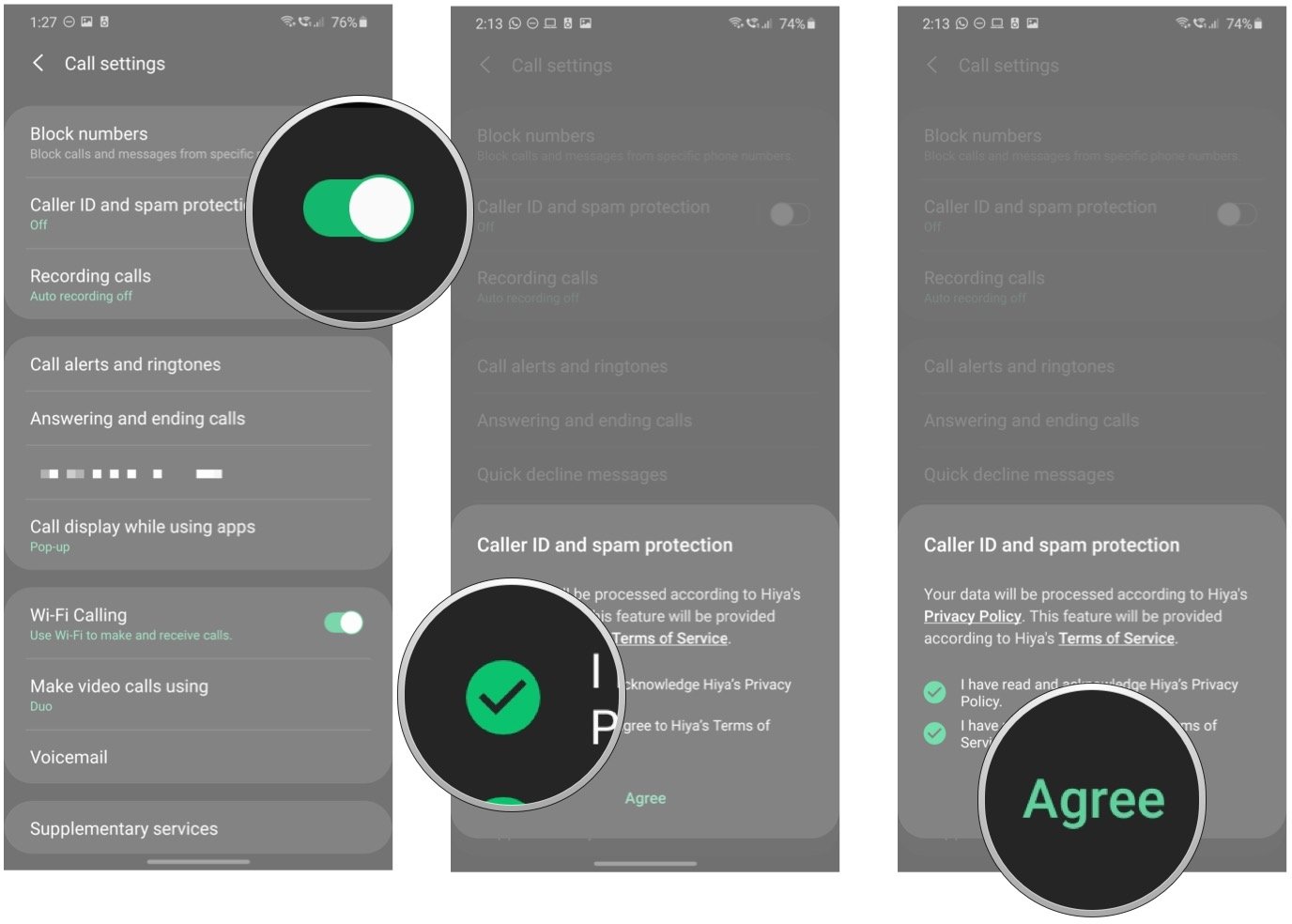
  4. Toggle Caller ID and spam protection to On.
  5. Read Hiya's privacy policy and select the boxes.
  6. Hit Agree to finish.

The Galaxy S20's caller ID and spam protection is powered by Hiya, a fraud detection and phone number lookup service. Hiya works particularly well with robocalls, and while the service's premium tier usually costs $15 a year, Samsung customers get it for free since it's baked right into the dialer.

The best part about Hiya is that it isn't Truecaller. Although Truecaller is widely used, it is notorious for serving ads and generally not caring about your privacy, which isn't a good look for a service that has access to your phone number. You don't have to worry about that with Hiya, and that makes it all the more enticing. If spam calls are an issue for you, then you should enable this feature right away.

Samsung Galaxy S20

$1,000 at Samsung

All the upgrades you care about.

The Galaxy S20 has a whole load of exciting upgrades, and Samsung made considerable changes on the UI side of things to make its interface cleaner and more modern. The phone has a stunning 120Hz panel, the latest internal hardware with 5G, excellent cameras, and all-day battery life.

Facebook unveils new design for its Messenger app

Discover and chat bots are out, speed and simplicity is in.

What you need to know

  • A report has revealed Facebook's plans to overhaul its Messenger app.
  • Developer screenshots show that the Discover tab is on its way out.
  • Chat bots, business and games are being hidden from view, and chat bots are being demoted.

A new report has revealed Facebook's plans to overhaul its Messenger app, an update Facebook says will begin rolling out shortly.

As reported by TechCrunch:

Chat bots were central to Facebook Messenger's strategy three years ago. Now they're being hidden from view in the app along with games and businesses. Facebook Messenger is now removing the Discover tab as it focuses on speed and simplicity instead of broad utility like China's WeChat.

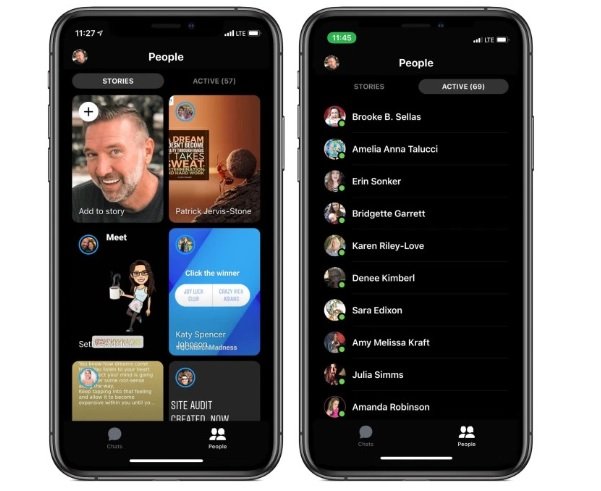
The changes are part of a larger Messenger redesign that reorients the People tab around Stories as Facebook continues to try to dominate the ephemeral social media format it copied from Snapchat. The People tab now defaults to a full-screen sub-tab of friends' Stories, and requires a tap over to the Active sub tab to see which friends are online now.

The change will apparently push users towards more time spent speaking with friends and viewing content, rather than speaking with chat bots, business and playing games. The Discover tab looks to be out, meaning the only tabs you'll see will be Chat and People. People will have two sub-tabs, one for Stories and one for Active.

According to the report, a Facebook spokesperson has confirmed that this redesign will "soon start rolling out", and that some of you might already have the update. More rollouts are planned this week. Facebook said it was delivering on its promise in August that it would eventually get rid of Discover.

Features like Chat bots, businesses and games are being hidden, however, now you'll have to purposefully search for them in the Messenger search bar in order to find them.

The update seems to suggest that Facebook is pushing messenger in the direction of WhatsApp in order to become a streamlined and focused messenger service, rather than a do-it-all utility app like China's WeChat.

As mentioned, some of you may already have this update, and more of you will get it next week.

Jumat, 28 Februari 2020

Only a week left to earn a 50k bonus on the Marriott Bonvoy Bold card

Heads up! We share savvy shopping and personal finance tips to put extra cash in your wallet. Android Central may receive a commission from The Points Guy Affiliate Network. Please note that the offers mentioned below are subject to change at any time and some may no longer be available.

Marriott's original offer on the Bonvoy Bold card is back after almost a year of absence.

What you need to know

  • Marriott has launched a new limited-time offer for its Bonvoy Bold credit card.
  • Earn 50,000 Bonus Points after you spend $2,000 on purchases in the first 3 months from account opening.
  • This offer has not existed since Marriott launched the card last summer.

Update: The 50K bonus point offer on the Marriot Bonvoy Bold Credit Card is set to expire on March 4, 2020.

If you have been holding off on picking up a Marriott co-branded credit card, now might be the time to make the jump. Marriott's 50K bonus point offer on the Marriot Bonvoy Bold Credit Card, which came back after missing from the card since its launch and its best welcome offer ever, is only available for one more week.

When Marriott launched the Marriot Bonvoy Bold Credit Card last year, it introduced the first Bonvoy branded credit card without any annual fee. It also kicked off the card's introduction to the market with a really impressive welcome bonus for a card of its class.

Now, that offer is back. New cardholders can once again earn 50,000 Bonus Points after you spend $2,000 on purchases in the first 3 months from account opening. The previous offer only required you to spend $1,000 over the course of 3 months, but the reward was capped at a much lower 30,000 Bonus Points. The Points Guy currently values Bonvoy points at $.080, meaning that this introductory offer will net you about $400 worth of hotel stays, a great offer for a card without any annual fees.

The card's rewards program continues to keep things simple. Cardholders earn 3X Bonvoy points at over 7,000 hotels, 2X points on other travel purchases (from airfare to taxis and trains), and 1X point on all other purchases. The card also gives 15 Elite Night Credits annually which qualifies you for Silver Elite Status and extra perks like a dedicated phone line for booking reservations and late checkouts. Other benefits include baggage delay insurance, lost luggage reimbursement, trip delay reimbursement, purchase protection, and Visa concierge service.

While the card does not earn more premium rewards like the Marriott Bonvoy Boundless Card or the Marriott Bonvoy Brilliant™ American Express® Card, you do get a lot of the same kinds of rewards and use it knowing you never have to pay an annual fee.

The 50K bonus point offer on the card is set to expire on March 4, 2020.

Bon voyage

Marriott Bonvoy Bold Credit Card

See at The Points Guy

Marriott Bonvoy Bold™ Credit Card from Chase® with no annual fee! Earn 50,000 Bonus Points after you spend $1,000 on purchases in the first 3 months from account opening. Earn 3X Bonvoy points per $1 spent at over 7,000 participating Marriott Bonvoy hotels. 2X Bonvoy points for every $1 spent on other travel purchases (from airfare to taxis and trains). 1X point for every $1 spent on all other purchases. Receive 15 Elite Night Credits annually, qualifying you for Silver Elite Status. Restrictions apply. No Foreign Transaction Fees. Earn Unlimited Marriott Bonvoy points and get Free Night Stays faster.

Only one week left to earn 100K bonus on the Marriott Bonvoy Boundless card

Heads up! We share savvy shopping and personal finance tips to put extra cash in your wallet. Android Central may receive a commission from The Points Guy Affiliate Network. Please note that the offers mentioned below are subject to change at any time and some may no longer be available.

What you need to know

  • Marriott has launched a new 100K bonus limited time offer.
  • The Marriott Bonvoy Boundless Credit Card is still eligible.
  • The Marriott Bonvoy Business™ American Express® Card has a bonus of 75,000 points.

Jump in on Marriott's biggest offer for a limited time.

Update: The 100k bonus point offer on the Marriott Bonvoy Boundless Credit Card is set to expire on March 4, 2020.

If you have been holding off on picking up the a co-branded credit card from Marriott, now might be the best time to make the leap. The Marriott Bonvoy Boundless Credit Card is currently offering new cardholders 100K in bonus points, but the offer is only good for one more week.

When Marriott acquired SPG hotels and brought their rewards program under the Bonvoy program, it had offered new cardholders of its Marriott Bonvoy Business™ American Express® Card and Marriott Bonvoy Boundless Credit Card a limited time 100K points bonus. For anyone who missed that offer and has held out in hopes of its return, Marriott is back. For a limited time, again, you can earn 100,000 in Marriott Bonvoy points with the Marriott Bonvoy Boundless Credit Card and 75,000 Marriott Bonvoy points with the Marriott Bonvoy Business™ American Express® Card. The Points Guy values Marriott Bonvoy points at around $0.80, so this offer equates to about $600 to $800 in hotel stays, a solid offer for anyone looking to visit one of Marriott's hotels anytime soon.

For anyone looking to earn this bonus and want a personal card, the Marriott Bonvoy Boundless™ Credit Card is eligible for this offer. This card is great for those who tend to stay at Marriott's 7,000 hotels around the world on personal trips, as the card offers 6X Bonvoy points for each booking. Cardholders also enjoy a Free Night Award every year and Automatic Silver Elite Status to get extra perks during your stay.

The 100,000 Marriott Bonvoy bonus point offer for the Marriott Bonvoy Boundless™ Credit Card will expire on March 4, 2020.

Bounding on in

Marriott Bonvoy Boundless™ Credit Card

See at The Points Guy

Grab 100,000 Bonus Points for a limited time after you spend $5,000 on purchases in the first 3 months from account opening. An additional Free Night Award is given to cardholders every year after account anniversary. Outside of that, earn 6X Bonvoy points per $1 spent at Marriott Bonvoy hotels and 2X Bonvoy points for every $1 spent on all other purchases. Cardholders also get Automatic Silver Elite Status each account anniversary year and can make their way to Gold Status when you spend $35,000 on purchases each account year. You also start with 15 Elite Night Credits each calendar year. This card has no foreign transaction fees and a $95 annual fee.

If you are looking for a business card, the Marriott Bonvoy Business™ American Express® Card is eligible for this 100K offer. Its annual fee of $125 is quickly justified after that welcome bonus and its stellar rewards and benefits. It goes further with rewards than its consumer-focused counterpart, also offering points on restaurant, gas station, and phone service purchases. Those who spend over $60,000 on the card every year can also earn an additional Free Night Award from Marriott.

Back in business

Marriott Bonvoy Business™ American Express® Card

See at The Points Guy

Earn 75,000 bonus Marriott Bonvoy points after you use your new Card to make $5,000 in purchases within the first 3 months. Plus, get a 0% intro APR on purchases for 6 months (then a variable 17.49%-26.49%). The offer ends on 10/23/2019. After that, get 6x points at participating Marriott Bonvoy hotels, 4x points at U.S. restaurants and U.S. gas stations, and 2x points on all other eligible purchases. Receive 1 Free Night Award every year after your Card account anniversary. Plus, earn an additional Free Night Award after you spend $60K in purchases on your Card in a calendar year. Enjoy complimentary Marriott Bonvoy Silver Elite status with your Card and get to Gold Elite status after making $35,000 in eligible purchases on your Card in a calendar year.

GDC 2020 is officially postponed following coronavirus concerns

Multiple companies dropped out of the conference in the past couple of weeks.

What you need to know

  • The Game Developers Conference (GDC) announced it was postponing its event in San Francisco in March.
  • Multiple large companies pulled out this week, including Microsoft and Epic Games.
  • Another GDC event will be held in the summer.

After weeks of speculation, the Game Developers Conference (GDC) announced Friday that it'll be postponing this year's event in San Francisco.

The move comes after multiple large companies pulled out this week, citing fears surrounding the coronavirus. Sony and Facebook were two of the first to announce they weren't attending. Just today, Activision Blizzard, Amazon, and Gearbox announced they were pulling out.

"After close consultation with our partners in the game development industry and community around the world, we've made the difficult decision to postpone the Game Developers Conference this March," the organization posted in a statement. "We're genuinely upset and disappointed not to be able to host you at this time."

GDC did add, however, that it plans to hold a "GDC event" in the summer. It'll have more details in the future. There is no word yet on what the refund policy will be for attendees.

The event was supposed to take place on March 16-20 at the Moscone Center in San Francisco. Originally, the only people affected by the coronavirus outbreak were companies and attendees from China, but the spread of the disease greatly impacted more organizations.

This is also not the first tech event that's been canceled on account of coronavirus anxieties. Mobile World Congress was canceled back in February. Just this week, Facebook's annual F8 conference and EVE Fanfest were also canceled.

This story is developing.

FCC is proposing a $200 million fine on carriers for selling your location

The fine has yet to be finalized and could change, but it is expected to be at least $200 million.

What you need to know

  • In 2018, it was discovered that all four major carriers in the U.S. were selling your real-time location data to third parties.
  • Further investigations later revealed that the data could sell for as little as $300 and end up in the hands of private individuals or businesses, including bounty hunters.
  • The FCC is expected to propose a fine of at least $200 million on AT&T, Sprint, T-Mobile, and Verizon over the sharing of your location data.

Back in 2018, it was revealed that all four major U.S. carriers were selling your real-time location data to third parties. Then, in 2019, an investigation by Motherboard uncovered that your location can be worth as little as $300, and the data had ended up in the hands of businesses or private individuals, including bounty hunters.

As you can expect, this practice of selling off your real-time location upset consumers as well as lawmakers. So much so, that Democratic Senator Ron Wyden called for the FCC to investigate into the issue. Now, Reuters is reporting that the FCC is proposing a fine on AT&T, Sprint, T-Mobile, and Verizon over the sharing of your location data.

The fine is expected to be at least $200 million and the FCC will most likely officially announce it on February 28, 2020. However, the amount still hasn't been finalized, and it could change, but sources say that it is "expected to total just over $200 million." T-Mobile is expected to have the largest fine of all the carriers and is currently in the process of merging with Sprint.

In response to the reports of the fines, Wyden suggested that Pai "failed to protect American consumers at every stage of the game."

This issue only came to light after my office and dedicated journalists discovered how wireless companies shared Americans' locations willy nilly.

He further commented on the fines calling them "comically inadequate" and saying it won't "stop phone companies from abusing Americans' privacy the next time they can make a quick buck."

Samsung Galaxy S20 Ultra review: Too much of a good thing